On this page
- 1. The Short Answer
- 2. The Real Picture: What Solo Women Actually Experience
- 3. Street Harassment: What It Is and How to Handle It
- 4. Solo Female Safety by City and Region
- 5. Dress and Cultural Expectations
- 6. Accommodation and Transport
- 7. Practical Safety Tips for Solo Women
- 8. How a Private Trip Changes the Experience
- 9. Frequently Asked Questions
At Morocco Tours, we have organised private journeys across Morocco since 2011. A share of our clients travel alone, and their questions about safety are among the most specific we receive. This guide draws on what we observe on the ground and on the feedback our team collects after trips, combined with official travel advice from the United States, United Kingdom and Canada.
Morocco is safe for solo female travelers, with a more honest answer than that single sentence provides. The risks are real but manageable, and they are not the risks most people imagine before they arrive. This guide explains what they are, where they are worst, and what preparation makes the difference.
Quick answer: Is Morocco safe for solo female travelers?
Yes. Many women travel Morocco independently each year, including first-time visitors with no prior experience of North Africa. Violent crime against tourists is rare. The most common difficulty solo women report is persistent street harassment and unsolicited attention in busy medinas. This harassment is usually verbal, but the US State Department and UK FCDO both acknowledge that women traveling alone face elevated unwanted attention, and incidents of unwanted physical contact do occur. Preparation makes a material difference: knowing which cities require more assertiveness, what to wear, how to move through a medina, and how to handle an unwanted interaction. Solo women who arrive with that groundwork in place report more manageable experiences.
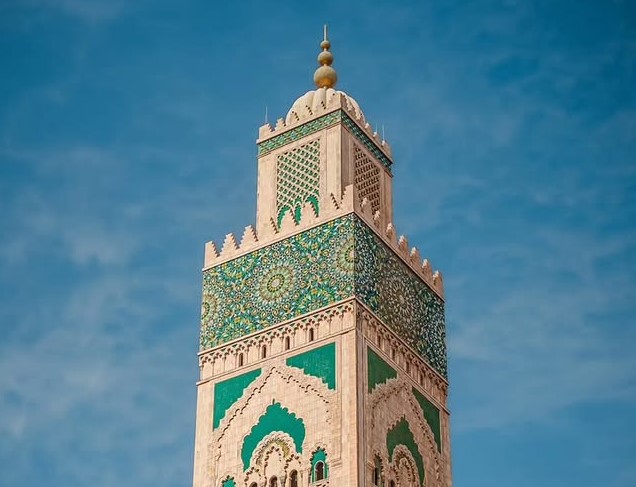
The Short Answer
Morocco is not a destination that requires a partner or a group to visit safely. Plenty of women travel it alone, cover the full circuit from Marrakech to the Sahara, and have no serious incident. The country is accustomed to foreign tourists, including solo women, and the infrastructure for travel is reliable.
The honest qualifier: Morocco is more demanding for solo women than for solo men or for couples. Street harassment is a documented reality, particularly in Marrakech, Fes and Tangier. It does not happen everywhere at the same intensity, and it is manageable with the right approach. Preparation matters here more than in many other destinations solo women consider, which is why this guide covers it in detail.
For the broader safety picture that applies to all travelers in Morocco, including terrorism risk levels, official advisories and petty crime, see our main guide: Is Morocco Safe to Visit?
Official travel advice for Morocco is published and regularly updated by the US State Department, the UK FCDO and the Government of Canada. The safety and security sections of the UK and Canadian advisories contain specific guidance for women travelers. Read the current versions before you travel; advisory wording changes.
The Real Picture: What Solo Women Actually Experience
The concerns solo women raise before traveling to Morocco and the concerns they report afterward are often different. Before the trip: violent crime, kidnapping, physical assault. After the trip: exhaustion from persistent attention, minor scams, one or two unpleasant interactions in a medina. Serious violent incidents are uncommon, but they are not absent from the record, and the US State Department specifically notes that women may face unwanted touching and other forms of harassment. The irritants are real and can be tiring. The preparation that reduces them is practical and learnable.
The most common experiences solo women report:
Unsolicited attention and following. Men will sometimes walk alongside a solo woman in a medina, offer directions that lead to a shop, comment on appearance, or make physical contact. This is most intense in Marrakech's Djemaa el-Fna area and in parts of Fes el-Bali. It diminishes sharply outside the tourist-heavy zones and in smaller cities.
Persistent vendors and fake guides. The medina economy operates partly on commission. A person offering to "show you the tanneries" or "the best restaurant" is usually steering you toward a shop where they earn a cut. This is not gender-specific, but solo women are targeted more often because they are seen as less likely to refuse. A firm, flat refusal without further conversation is the most effective response.
Being asked where your husband is. Morocco is a conservative society in many respects, and traveling alone as a woman is outside the norm for many Moroccans. Questions about marital status are common and mostly curious rather than threatening. A ring and a willingness to claim a husband who is "at the hotel" are practical tools, not admissions of defeat.
Genuine warmth and hospitality. Morocco also has a strong culture of hospitality, and solo women who move through the country with confidence regularly report kindness from local families, riad owners and other travelers. The difficult interactions tend to be concentrated in specific tourist zones at specific times of day. Much of Morocco is calm.
Street Harassment: What It Is and How to Handle It
Street harassment in Morocco can include unwanted comments, persistent following, and in some cases unwanted physical contact. Many solo women travel without serious incident, but harassment can become intimidating or threatening. If someone follows, touches or threatens you, prioritise reaching a safer location and seeking assistance rather than attempting to manage the situation alone.
The approaches that work, based on what our clients report back:
No eye contact, no response. Engaging, even to say no politely, invites continuation. The most effective technique is a flat refusal: "La, shukran" (No, thank you), said once, without stopping, without making eye contact. Walk as if you know where you are going even if you are slightly lost.
Don't smile reflexively. In some Western contexts, a polite smile while refusing is standard. In a Moroccan medina, it is read as an invitation to continue. A neutral expression is not rudeness; it is clarity.
Enter a shop if you feel uncomfortable. Shopkeepers are generally protective of customers, and stepping inside removes you from the street without confrontation. You are not obliged to buy anything.
Evenings in medinas. The medina atmosphere at night, particularly in Marrakech, is different from the daytime. The crowds thin, the lighting changes, and solo women who are unfamiliar with the layout can find it disorienting. Returning to your riad by a route you know before it gets late is a sensible rule for the first few nights.
Local women as anchors. If you feel uncertain about a situation, moving toward other women (a cafe, a stall, a public square) changes the dynamic. Moroccan women are generally protective toward foreign solo women who appear uncomfortable.
Solo Female Safety by City and Region
Morocco is not uniform. The experience of a solo woman in Asilah is not the same as in central Marrakech. The assessment below reflects what our clients report.
Marrakech is the most visited city and the one that requires the most attentiveness. The area around Djemaa el-Fna and the main souks is where unsolicited attention is most intense, particularly in the late afternoon and evening. The residential parts of the medina and the Gueliz neighbourhood are quieter. Marrakech is manageable, but it is the city where preparation matters most. Most solo women who have a difficult day in Morocco are having it in a busy Marrakech souk.
Fes has a more complex medina than Marrakech, and the risk of getting lost is real. Unsolicited guides are common near the tanneries. A licensed guide for the first day in Fes el-Bali is worth the cost for any solo traveler. The intensity differs from Marrakech: less aggressive selling, more navigation pressure. The attentiveness required is similar.
Chefchaouen is widely reported as one of the easiest cities for solo women. The blue medina is compact, easy to navigate, calm in pace, and attracts a high proportion of independent travelers. Street harassment is low. It is a practical choice for a first solo night in Morocco.
Essaouira is coastal, breezy, and calm in pace. Solo women rate it as one of the more comfortable cities in Morocco. The medina is flat and easy to navigate. The beach is popular with kite surfers and families.
The Atlas and the South (the mountain villages, the Draa Valley, Merzouga and the Sahara) are generally calm for solo women. Rural Morocco does not have the same tourist-economy pressure as the imperial cities. The practical challenge is logistics: the distances are long, public transport is limited, and the desert requires an organised excursion. Solo women doing the southern circuit independently take on more logistical complexity than those with a private driver.
Tangier has improved in recent years following urban regeneration, but the area around the port and the old medina still requires the same attentiveness as Marrakech. The new Tangier along the corniche is a different environment.
Dress and Cultural Expectations
Morocco is a Muslim-majority country with conservative dress norms in most areas outside beach resorts. Solo women attract less attention and encounter less friction when they dress with modest coverage in cities and rural areas.
What this means in practice: shoulders covered, knees covered, loose rather than fitted clothing in traditional medinas and mosques. This is not a legal requirement for foreign visitors, and Moroccan cities have visible diversity in how women dress. It is practical advice, not a restriction. In coastal towns like Agadir and Essaouira, swimwear is standard on the beach.
A light scarf is one of the more useful things to pack. It covers shoulders in conservative neighbourhoods and at religious sites open to visitors, reduces attention in a busy medina, and doubles as sun protection in the desert. Note that most Moroccan mosques are not open to non-Muslim visitors; the scarf is relevant for the sites that are accessible, including mausoleums and some historic religious buildings.
Modest dress is appropriate to local cultural context and is worth adopting as a matter of respect. The relationship between dress and harassment is less straightforward: covered dress may reduce some forms of unsolicited attention in certain contexts, but it does not determine whether harassment occurs, and a traveler's clothing does not bear on responsibility for any incident. The techniques for handling unwanted attention apply regardless of what you are wearing.
Accommodation and Transport
Riads are the standard accommodation in Moroccan medinas, and they suit solo female travelers well. They are typically family-run, staff know the guests, the entrance is a single door that is locked at night, and there is usually someone available who can orient you or call a taxi. A riad in a mid-range to upper-mid budget tends to have more attentive service than a large hotel. If you plan to return late, tell the riad in advance and agree on a contact arrangement. Do not assume automatic follow-up.
Booking.com and similar platforms carry genuine reviews from solo women who have stayed at specific properties. Filter for recent reviews and look for comments from solo female travelers specifically; their experience is more predictive than the aggregate score.
Taxis: use petit taxis (metered, in-city) and agree on the meter before you get in. Grand taxis for longer routes are shared vehicles; this is normal and safe but can feel unfamiliar. For airport runs and late-night returns, ask your riad to arrange a specific driver rather than hailing on the street. The cost is the same or slightly higher, and you get a vetted contact.
Night buses and trains: ONCF trains are generally safe and used by Moroccan families. Night trains are acceptable but a reserved compartment is more comfortable. Night buses are a lower cost option; the comfort level varies by operator. For the routes solo women most often take (Marrakech to Essaouira, Marrakech to Fes), CTM is the reliable choice.
Practical Safety Tips for Solo Women
Share your itinerary. Tell someone at home your daily plan, even in rough outline. This is not specific to Morocco; it is standard solo travel practice. If you expect to return late, let your riad know and agree in advance whether staff can be contacted if you need assistance.
Keep a local SIM card active. Morocco has reliable coverage from Maroc Telecom and Orange. A local SIM costs very little and gives you maps, translation and the ability to call your riad or a taxi without relying on wi-fi. Buy one at the airport on arrival.
Know the emergency numbers. From a mobile: police 190, ambulance 150, Royal Gendarmerie 177. From a landline: police 19, ambulance 15, Gendarmerie 177. Tourist police operate in Marrakech, Fes, Agadir and other main cities and handle incidents involving foreign visitors.
Split your money. Keep your main cash, bank cards and passport separate from a small daily wallet. Pickpocketing in medinas is opportunistic. Losing a small amount of cash is inconvenient; losing everything is a trip-altering event.
Don't navigate the medina staring at your phone. It marks you as lost and distracted, which increases unsolicited approaches. Read the map before you leave the riad, identify your landmarks, and check the phone discreetly when you are inside a shop or cafe.
Trust your instincts. If a situation feels wrong, leave it. Morocco is a country where the social pressure to be polite is high, and many travelers override their instincts to avoid seeming rude. A direct exit without explanation is always acceptable.
Eat where local women eat. Restaurants with a visible female clientele, whether Moroccan or tourist, are more comfortable for solo women than venues aimed primarily at tourist men.
How a Private Trip Changes the Experience
Many of the pressures solo women encounter in Morocco are logistical: not knowing where to go in a medina, not having a vetted driver for a long route, not having someone to ask whether a situation is normal or not. A private trip with a local operator can reduce many of those pressures without reducing the experience of Morocco itself.
What changes with an organised private trip:
A vetted driver-guide for every leg. Every driver Morocco Tours assigns knows the route, is licensed, and has worked with solo international travelers before. Medina navigation, transport logistics and late-night returns become easier to plan and manage with local assistance in place.
Accommodation pre-selected. We select riads and hotels we know directly, where the staff know our clients are expected. If something is wrong with a room or a situation, there is a contact to call rather than a booking platform to message.
The presence of a local guide. A licensed Moroccan guide in a medina changes the dynamic. Unsolicited approaches are reduced when a traveler is with a known local contact. This is a pattern our clients report, not a guarantee.
Solo independent travel in Morocco is viable and many women do it well. The decision between independent and organised is not a safety binary. It is a question of how much logistical pressure you want to manage yourself, and how much prior experience with North Africa you are bringing. A private trip can reduce many of those pressures; it does not remove the need for the same awareness any solo traveler should carry.
Frequently Asked Questions
Is Morocco safe for solo female travelers at night?
The main cities are active at night and the streets are not empty, but the character of busy tourist areas changes after dark. Solo women are advised to return to their accommodation by a known route before it gets late, particularly in Marrakech and Fes, until they are familiar with the layout. Night transport in a pre-arranged taxi from your riad is safer than hailing on the street.
Should I wear a hijab or cover my hair?
No. Foreign women are not expected to cover their hair in Morocco. Modest dress (covered shoulders and knees in medinas and rural areas) is the practical standard. A scarf in your bag is useful but wearing it on your head is a personal choice, not a requirement.
Is Morocco safe for solo female travelers in the desert?
Yes, with an organised excursion. The Sahara camps around Merzouga are set up for international visitors and are used to solo women travelers. The practical issue is getting there: the route from Marrakech to Merzouga takes roughly 9 to 10 hours by road depending on the route and stops, and breaking the journey with an overnight in the Draa Valley or Dades Gorge is both more comfortable and more rewarding. Doing this leg in a vetted private vehicle is more reliable than public transport.
What if I experience harassment or feel unsafe?
The response depends on the severity. For unwanted attention or following: move toward a populated area, enter a shop or cafe, or return to your accommodation. Staff in riads and hotels are accustomed to these situations. For a more serious incident: ask explicitly for help from staff, other travelers or bystanders. Call emergency services if you are in immediate danger (mobile: 190 for police, 150 for ambulance). Contact your accommodation or, if you are a Morocco Tours client, your local team directly. For incidents you want to report, contact the tourist police in the main cities, or your country's embassy or consulate for serious matters. Keep any relevant details (time, location, description) when it is safe to do so.
Is Morocco safer for solo women than other countries in the region?
Direct comparisons between countries are difficult to make reliably. Experiences vary considerably depending on the traveler, the cities visited and the precautions taken. Morocco has an established tourism infrastructure and receives a large volume of international visitors each year. Solo women should weigh the harassment risks, transport conditions and official travel advice specific to Morocco when planning their trip, rather than relying on regional comparisons.
What is the best first city for a solo female traveler in Morocco?
Chefchaouen or Essaouira. Both are compact, well-structured for independent navigation, and calmer than Marrakech or Fes. Arriving in Marrakech first is the standard entry. Spending your first night in one of these smaller cities gives you a calmer start and a clearer baseline before you tackle a major medina.
Plan a Private Journey with Local Support
Looking for a private trip with experienced local drivers, carefully selected accommodation and licensed guides? Tell us your dates and what you want to see. We will put together an itinerary that fits your travel style.
Plan Your Private Morocco TripFurther Reading
About the author
Said has been a senior guide and trip designer with Morocco Tours since the company was founded in 2011. He has accompanied hundreds of private journeys across Morocco and writes from direct experience of the routes, cities and situations this guide describes.
_1793050830.webp)