On this page
- 1. The Short Answer: Yes, With Sensible Precautions
- 2. What the Official Advisories Say
- 3. The Real Concerns, Honestly
- 4. Is Morocco Safe for You? By Traveler
- 5. Safety City by City
- 6. Common Scams and How to Handle Them
- 7. Is Morocco Safe for Solo Women?
- 8. Practical Safety Tips
- 9. How a Private Trip Changes the Picture
- 10. Frequently Asked Questions
At Morocco Tours, we have organised more than 5,000 private journeys across Morocco since 2011. As a local travel agency based in Marrakech, we know the questions visitors ask about safety and the practical concerns they encounter on the ground.
Morocco welcomes millions of travelers each year, but no destination is entirely risk-free. This guide combines our experience organising private trips with official travel advice from the United States, United Kingdom and Canada. We explain the risks worth knowing, the precautions that help, and what to expect whether you travel independently or choose an organised private tour.
Quick answer: Is Morocco safe to visit?
Yes, for most travelers, with the same common sense you would use in any busy destination. The US State Department places Morocco at Level 2, "Exercise increased caution" (updated 4 September 2026), the same level it assigns to France, Spain and the United Kingdom. Violent crime against tourists is rare. The everyday realities are petty theft in crowded areas, persistent vendors and street scams, and tiring long-distance driving, none of which stops a well-planned trip. Solo travelers, families and solo women all visit Morocco regularly. The sensible precautions are the ordinary ones: watch your belongings in crowds, use licensed guides, agree prices before you accept a service, and dress with a little modesty out of respect.
The Short Answer: Yes, With Sensible Precautions
For the great majority of visitors, Morocco is a safe place to travel. Tourism is a central part of the economy, the country receives millions of international visitors each year, and the areas travelers actually go to, the imperial cities, the Atlas, the Sahara, the coast, are used to welcoming foreigners. Violent crime against tourists is uncommon. What you are far more likely to meet is petty crime in crowds and the ordinary friction of a destination where haggling and persistent selling are part of daily life.
"Safe" still has edges worth naming. Pickpocketing happens in busy medinas and markets. Scams are common and are designed to feel helpful rather than threatening. Long drives through the mountains and the desert are tiring and are better in trusted hands. None of this makes Morocco dangerous; it makes it a place where a little preparation goes a long way, which is the honest version of the answer most travelers are looking for.
What the Official Advisories Say
Government travel advisories are the most neutral reference point, so they are worth reading before the opinions. They describe risk in measured terms and are updated as conditions change.
The US State Department places Morocco at Level 2 of 4, "Exercise increased caution," due to the risk of terrorism, in its advisory updated on 4 September 2026. The level itself did not change at that update; only the summary was revised. Level 2 is the same rating the State Department gives to much of Western Europe, including France, Spain and the United Kingdom. Level 2 calls for increased awareness and sensible precautions. It does not mean travelers should avoid Morocco. Level 3 ("Reconsider travel") and Level 4 ("Do not travel") are the serious tiers, and Morocco sits below both.
The UK Foreign, Commonwealth and Development Office (FCDO) publishes similar guidance and updates it for events such as demonstrations or severe weather. It does not advise against travel to the main tourist regions. Beyond terrorism as a background risk, the FCDO also flags opportunistic theft, occasional harassment, unofficial guides and risks linked to unregulated tourist activities. As with any destination, the consistent advice is ordinary vigilance in crowded public places and choosing licensed, reputable operators for activities.
Canada rates Morocco at "Exercise a high degree of caution," citing terrorism, crime and the situation in areas near the Western Sahara borders. Canadian travelers should check the Government of Canada travel advice for the current detail, particularly the specific regional warnings if traveling toward the south.
A practical note on Western Sahara: this disputed territory in the far south is treated separately in every advisory, with more caution, and standard travel insurance may not cover it. It is well away from the usual Morocco itineraries, and nothing on a normal cities, Atlas and Sahara trip goes there.
Advisories change. Check the US State Department, UK FCDO and Government of Canada pages for the current wording before you travel; the levels above are what they stated when this guide was last updated.
The Real Concerns, Honestly
Petty crime and pickpocketing
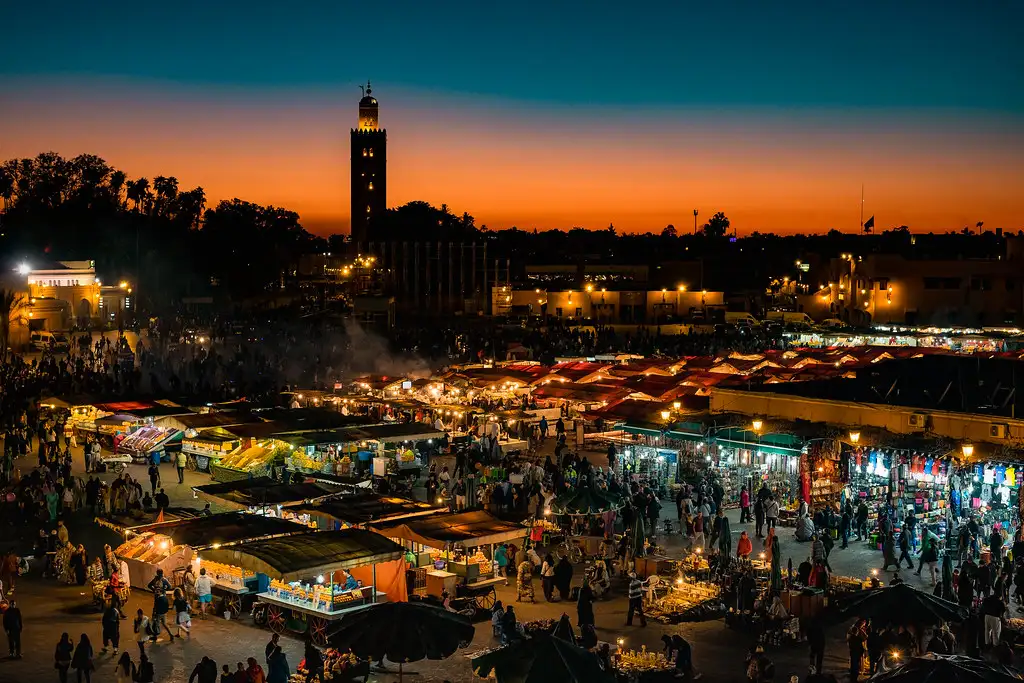
This is the most common issue travelers actually meet. Crowded medinas, markets and the Jemaa el-Fna square in Marrakech are where bags are opened and phones go missing. It is opportunistic, not violent. A zipped bag worn in front, a hotel safe for your passport and spare cash, and a little attention in crowds handle almost all of it.
Scams and persistent vendors
Most unpleasant encounters are scams rather than crime: an unrequested "guide" who then demands payment, a wrong direction that leads to a shop, a tanner or a "closed square, come this way." They rely on politeness and hesitation, not force. Saying a firm, friendly "no thank you" and walking on defuses nearly all of them. We cover the specific ones below.
Protests and demonstrations
Demonstrations happen occasionally and are usually localized and peaceful. The standard advice is simply to avoid large gatherings, which rarely intersect with a traveler's day. Advisories note them when they occur and lift the note afterward.
Roads and long-distance driving
For most travelers, the most significant physical hazard in Morocco is the road rather than crime. Long mountain and desert drives, mixed traffic, and night driving in rural areas carry real risk. An experienced local driver can reduce the stress of long-distance travel and help manage unfamiliar road conditions, especially on mountain and desert routes, which is the strongest practical argument for not self-driving the south.
Terrorism
Both the US and UK advisories list terrorism as a background risk, as they do for many countries including across Europe. Morocco invests heavily in tourism security and visible policing in tourist areas. The practical guidance is the same everywhere: stay aware in crowded public places. It is a reason for ordinary vigilance, not for avoiding the country.
Is Morocco Safe for You? By Traveler
Is Morocco safe for Americans? Yes. American visitors travel throughout Morocco without trouble, and the two countries have long, friendly relations. The State Department's Level 2 rating is the same one it gives to much of Europe. The precautions are the general ones in this guide, not anything specific to US citizens.
Is Morocco safe for families? Yes, and it is a rewarding family destination. Moroccan culture is warm toward children. The things to manage are practical rather than safety threats: the heat in summer, tiring long drives, and crowded medinas where young children should be kept close. Our Morocco family tours are planned around those realities.
Is Morocco safe for solo travelers? Yes. Solo travelers, including first-time visitors to the region, come to Morocco regularly. The main adjustments are social rather than dangerous: more attention from vendors and guides when you are alone, and the usual care with where you walk after dark. Solo women have a dedicated section below.
Is Morocco safe for older travelers? Yes. The considerations are comfort and health more than security: heat, uneven medina streets, and long drives. A private pace and a dedicated driver remove most of the strain.
Is Morocco safe for LGBTQ+ travelers? Moroccan law criminalizes same-sex sexual acts under Article 489 of the Penal Code, with penalties of six months to three years in prison and fines. The law concerns sexual acts, not sexual orientation itself. LGBTQ+ travelers should be aware of the legal restrictions and the potential for discrimination or harassment before departure.
The UK government warns that public displays of affection between same-sex partners can lead to prosecution, and that dating apps may involve legal, personal safety and privacy risks. LGBTQ+ travelers do visit Morocco, and the best preparation is to read current official travel advice rather than assume the experience will match home.
Safety City by City
Is Marrakech safe?
Yes, and it is where most trips begin. The caveats are concentrated in the busy heart of the medina and around Jemaa el-Fna: pickpockets in the crowds, unofficial guides, and the "the square is this way" redirections toward shops. By day it is lively and easy; after dark, stick to well-lit, busy streets and take a taxi rather than threading quiet alleys. Our Marrakech travel guide covers the city in detail.
Is Casablanca safe?
Yes, with big-city awareness. Casablanca is Morocco's largest city and economic hub, and it feels more like a modern metropolis than a tourist town. Petty crime exists as in any large city; keep valuables discreet and use registered taxis or ride apps at night.
Fes
Yes. The old medina of Fes is one of the largest car-free urban areas in the world, and it is genuinely easy to get lost in, which is where unofficial "guides" step in. A licensed guide for the medina is money well spent, both for orientation and to avoid the hassle.
Chefchaouen, the coast and the desert
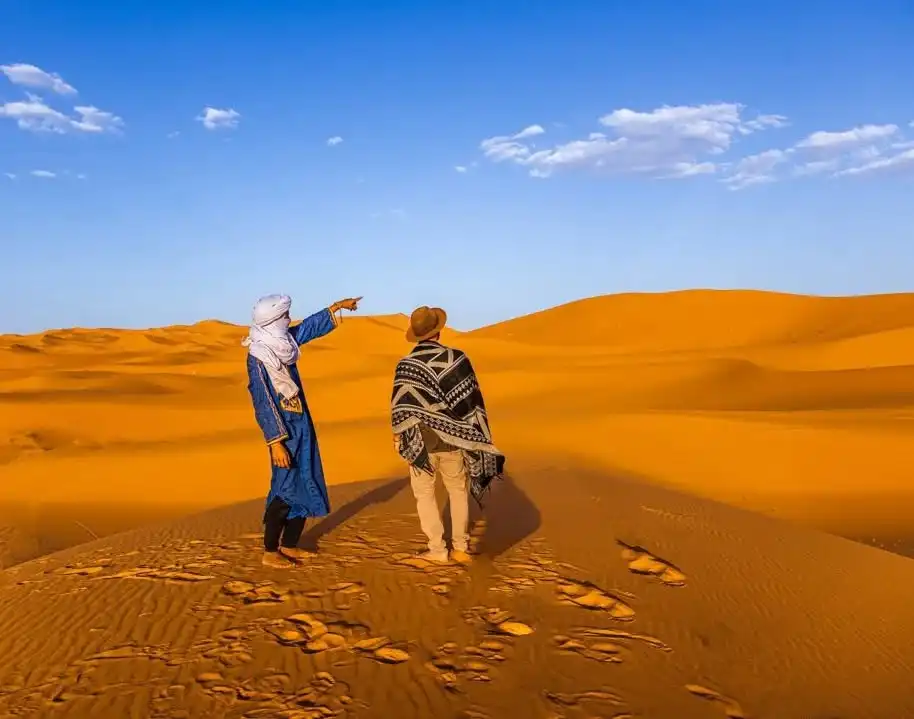
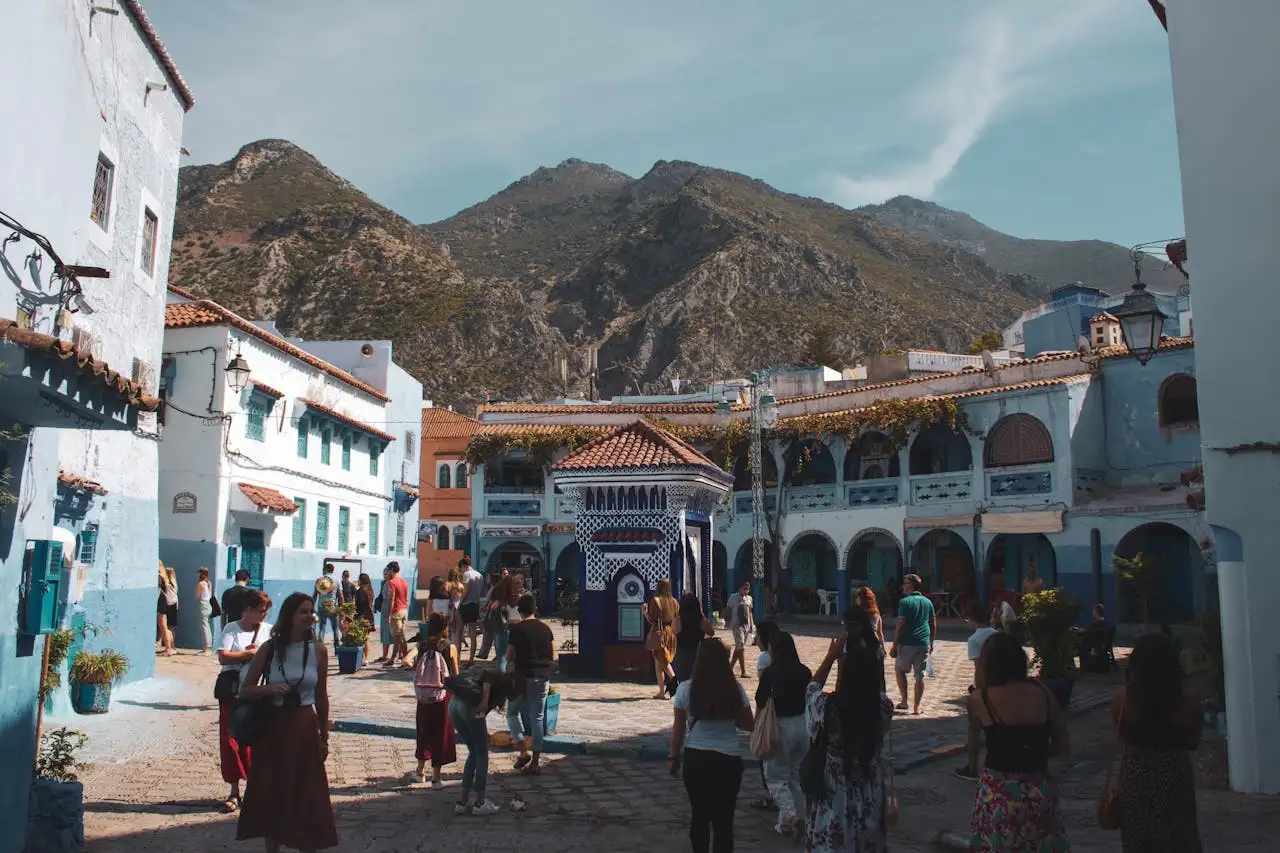
The blue city of Chefchaouen, the Atlantic coast towns such as Essaouira, and the desert around Merzouga are among the calmest parts of a Morocco trip. Smaller towns have far less of the medina hustle, and desert camps, carefully chosen, are among the calmer parts of the trip. The desert's real considerations are heat and cold nights, not personal security, which our Merzouga guide covers.
Common Scams and How to Handle Them
Knowing the handful of common scams in advance removes most of their power. Most are a nuisance rather than a physical threat, though some encounters can become persistent or uncomfortable if not ended early. The response is the same for all of them: a calm, firm refusal and moving on.
- The unofficial guide. Someone attaches themselves to you, offers directions or a tour, then demands payment. Decline politely from the start and use licensed guides arranged through your riad or operator.
- "This way is closed." You are told a street or the main square is shut and steered toward a shop or a tannery. Trust your map and keep going.
- The helpful redirection. A stranger "walks you" somewhere you did not ask to go, then asks for money. A firm no thank you ends it.
- Henna and photos. In Jemaa el-Fna, henna is applied or a photo is taken, then payment is demanded. Agree a price first, or decline.
- Taxi fares. Agree the fare before getting in, or insist on the meter. Keep small change for this.
Is Morocco Safe for Solo Women?
Yes, and many women travel Morocco solo every year, but it is fair to say it takes a little more management than some destinations. Unwanted attention and street harassment are concerns reported by a number of solo female travelers. Experiences vary considerably, and no set of precautions guarantees that harassment will not occur. That said, the practical habits below make a real difference for many.
Dressing modestly, with shoulders and knees covered, is in keeping with local norms and can reduce unsolicited attention; it is a choice about cultural respect as much as anything else. Beyond that: project confidence and keep walking rather than stopping to engage; avoid quiet streets after dark and take taxis instead; treat a riad or a known operator as a base you can ask for help. Sunglasses, headphones and a clear destination in mind are quietly effective at ending unwanted conversations. Solo women routinely have an excellent trip, and the common feedback is that the experience is demanding in a social sense, not in terms of personal security.
Want to travel Morocco with less to manage?
Tell us who is travelling and what you would like to see. Our local team plans the route, the driver and the guides so the day-to-day logistics, and most of the hassle, are handled for you. Plan Your Private Morocco Trip →
Practical Safety Tips
- Guard against petty theft. A zipped bag worn in front in crowds, a hotel safe for your passport and spare cash, and a photo or copy of your documents.
- Use licensed guides. Especially in the medinas of Fes and Marrakech, an official guide saves you both the maze and the unofficial-guide hassle.
- Agree prices first. Taxis, henna, photos, any service. Settle the number before you accept it, and carry small change.
- Dress with some modesty. Shoulders and knees covered draws less attention and shows respect, particularly for women and outside the resorts.
- Be careful with the roads. Avoid driving long rural distances at night. An experienced local driver is safer and less stressful than self-driving the south.
- Mind food and water. Bottled or filtered water, and a little care with street food at first, head off the most common traveler illness.
- Keep the numbers. In Morocco, emergency numbers differ depending on your phone. From a mobile: police 190, ambulance 150, gendarmerie royale 177. From a landline: police 19, ambulance 15. Save your riad or operator's direct number too, as local contacts are often the fastest first step.
- Trust your instincts. If a situation feels off, leave it. Confidence and a polite exit solve most of the friction travelers meet.
Health, activities and unexpected emergencies
Travel insurance with medical evacuation cover is strongly recommended; Moroccan public hospitals vary in quality and private clinics in major cities are better-equipped but expensive. The US State Department specifically recommends coverage for medical expenses and medical evacuation before travel. If you have a pre-existing condition, check with your doctor and confirm your policy covers treatment abroad.
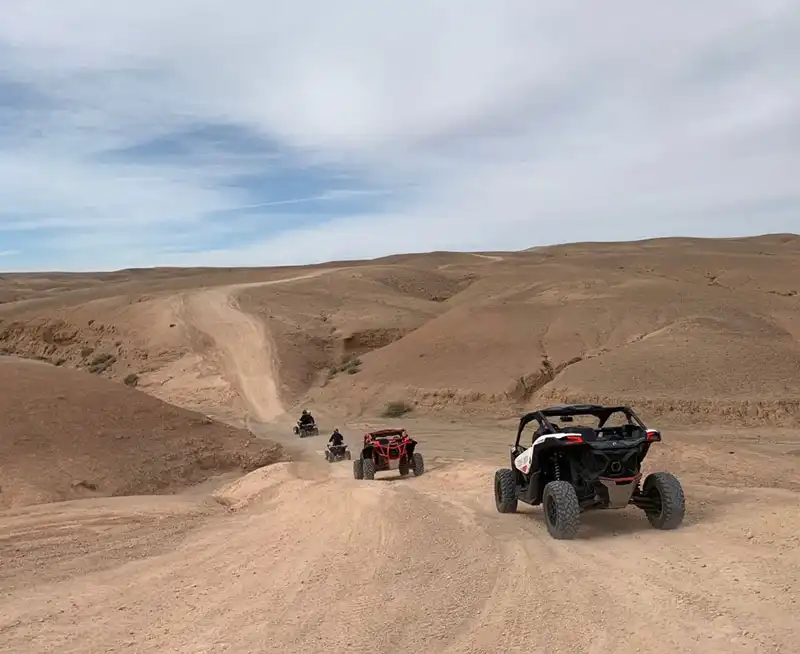
For activities, choose licensed operators. Quad biking, hot-air ballooning, trekking and beach activities all carry inherent risk, and the FCDO recommends using properly insured, reputable providers. Ask about safety equipment and guides before booking, and avoid informal operators. Natural hazards are also worth noting: flash floods can occur in the south and the Atlas after heavy rain, and the Agadir region sits in a seismically active zone. These are background considerations, not reasons to avoid the trip, but the practical point is to check local conditions and follow your guide's advice in mountain and desert terrain.
How a Private Trip Changes the Picture
Most of the concerns on this page are logistics, and logistics are exactly what a private trip takes off your plate. An experienced driver who knows the routes can reduce the stress and risk of long rural drives significantly. Licensed local guides help travelers navigate unfamiliar medinas and reduce unwanted approaches from unofficial guides. A team on the ground means a phone number to call if anything feels wrong, and accommodation that is known and vetted rather than booked blind.
Many people travel Morocco independently and do well. The difference a local operator makes is narrower than you might expect: the medina maze, the long drives, the scams, the question of who to trust. Those are the things a private trip takes off the table. Most of our travelers say the same thing afterward: Morocco was not what they feared, and it was easier than they expected.
Frequently Asked Questions
Is Morocco safe to visit?
Yes, for most travelers, with ordinary precautions. The US State Department rates Morocco Level 2 of 4, "Exercise increased caution," the same level as France, Spain and the UK. Violent crime against tourists is rare; the everyday realities are petty theft in crowds, street scams and tiring long drives, all of which a little planning handles.
Is Morocco safe for American tourists?
Yes. Americans travel throughout Morocco without trouble, and relations between the two countries are long and friendly. The precautions are the general ones, watch your belongings in crowds, use licensed guides, agree prices first, not anything specific to US citizens.
Is Marrakech safe for tourists?
Yes. The main things to watch are concentrated in the busy medina and around Jemaa el-Fna: pickpockets, unofficial guides, and redirections toward shops. By day it is easy and lively; after dark, stay on well-lit, busy streets and take a taxi rather than quiet alleys.
Is Morocco safe for solo female travelers?
Yes, and many women travel solo there each year. Unwanted attention and street harassment are concerns reported by some travelers; experiences vary and sensible precautions help, though none guarantee that harassment will not occur. Dressing modestly, projecting confidence, avoiding quiet streets after dark and using taxis at night make a meaningful difference, and solo women routinely have a rewarding trip.
What are the main safety risks in Morocco?
In order of how often travelers actually meet them: petty theft in crowded areas, street scams, and long-distance road travel, which is the real physical hazard. Violent crime against tourists is uncommon, and terrorism is listed by advisories as a background risk, as it is for many countries.
Do I need vaccinations or special health precautions for Morocco?
No special vaccinations are generally required for standard tourist travel, though you should check current guidance with your doctor or a travel clinic before you go. Day to day, bottled or filtered water and some care with street food at first prevent the most common traveler illness.
Is it safe to drive in Morocco?
City and highway driving is manageable, but long rural, mountain and desert drives, and night driving, are the real risk, more than crime. For trips across the south and to the desert, a trusted driver who knows the roads is both safer and far less tiring than self-driving.
Further Reading
- US State Department: Morocco Travel Advisory - current advisory level and summary
- UK FCDO: Morocco travel advice - safety, security, regional notes and entry requirements
- OSAC: Morocco - overseas security reports for travelers and organisations
- Government of Canada: Morocco travel advice - advisory level, regional warnings and entry requirements
Written by
Said, Senior Guide and co-founder of Morocco Tours. A former mountain guide, Said has been a guide certified by Morocco's national tourist office since 2009.
Still weighing up a first trip? Our guide to first-time visiting Morocco walks through where to go and what to expect. When you are ready, tell us who is travelling and what you would like to see, and we will plan the route, the driver and the guides so the day-to-day is handled for you. Start with a tailor-made Morocco trip built around your dates and pace.
Explore Morocco Private Tours → · Plan a Private Trip →
You may also like: Best Time to Visit Morocco · Marrakech Travel Guide · Morocco Packing List · Chefchaouen Travel Guide
_1793050830.webp)