

Morocco isn't a country to rush. It's a country to understand.
Morocco Tours
Tailor-Made · Travel Local Agency in Marrakech · Established since 2011
Morocco Tours
Sahara, Imperial Cities
& Tailor-Made Itineraries
Tailor-Made · Travel Local Agency in Marrakech · Established since 2011
More than five thousand travellers and one single principle: we don't start by asking where you want to go, but we start by deciding how Morocco should feel. Every itinerary is private, built around your pace, and designed by local experts who live here.
5,000+
Tours Organized
4.9 ★
Google & Tripadvisor
Est. 2011
in Morocco
Travel Dates
Your Choice
Every itinerary on this website has been refined through thousands of private journeys across Morocco. They are not assembled from a template, but built from what actually works on the road.
Who we are
Your Local Morocco Travel Agency in Marrakech
At Morocco Tours, we are a licensed travel agency based in Marrakech designing custom tailor-made Morocco itineraries since 2011. Every itinerary is built around your airports, your travel pace, and your interests, rather than a fixed group schedule.
Planning a Sahara Desert tour, an Imperial Cities circuit through Fes, Meknes and Marrakech, or a northern Morocco trip via Chefchaouen and Tetouan? Our local experts build your itinerary from scratch - at your own pace, with your budget in mind.
Licensed drivers. Curated riads. Expert medina guides. All transparent pricing. Rated excellent on Google and Tripadvisor by 5,000+ travellers who chose private travel in Morocco over group tours.


Travelers'
Choice2024
Choice2024
Plan by duration
How Many Days in Morocco?
3
Days
The Essential Morocco Escape
One direction done properly. Sahara from Marrakech, or Casablanca to Fes. Long weekend or Spain add-on.
More details →
5
Days
The First Complete Circuit
Sahara with 2 desert nights. No driving day over 5 hours. First format that makes the country make sense.
More details →
Most popular8
Days
The Perfect First Morocco Journey
Imperial Cities + Sahara in one arc. Fes medina 2 days. 2 Sahara nights. Kasbah route. One-way format.
More details →
10
Days
The First Complete Morocco Experience
Adds Chefchaouen without compressing Fes or the desert. North + Imperial + Sahara in one arc.
More details →
15
Days
Understanding Morocco
Full country. Fes medina 3 days. 3 Sahara nights. Rest days built in. The trip most guests say was life-changing.
More details →
Quick guide
How Long Should Your Morocco Trip Be?
| If you have… | We recommend… | What it covers |
|---|---|---|
| 3 days | The Essential Sahara Escape | Marrakech loop or Casablanca to Fes. One direction done properly. |
| 5 days | Sahara & Atlas, or Imperial Cities arc | First complete circuit. 2 Sahara nights. No driving day over 5 hours. |
| 8 days ★ | First Complete Morocco Journey | Imperial Cities + Sahara + kasbah route. Most recommended for first visits. |
| 10 days | Complete Morocco Highlights | Adds Chefchaouen. North + Imperial Cities + Sahara. No compression. |
| 12-15 days | Morocco in Depth | Full country, rest days built in, 3 Sahara nights. The trip people plan to return from. |
★ Most popular format among our first-time Morocco travellers
Most booked
Most Popular Morocco Tours


Where we go
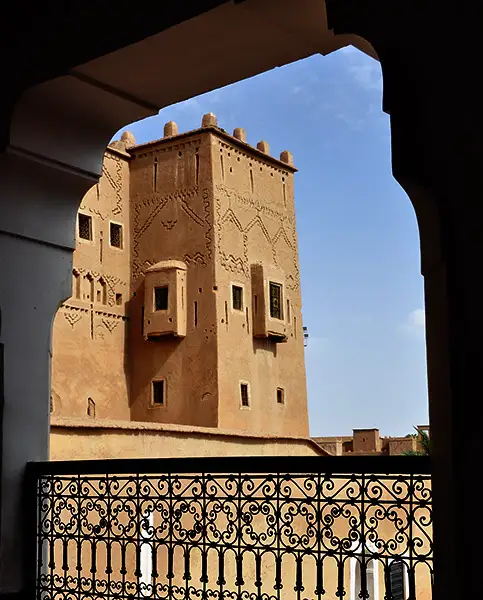
Morocco's Most Visited Destinations



Why travel with us
Morocco Designed by People Who Live Here
100% Private — No Groups
Your vehicle, your driver, your schedule. No other families, no fixed departure times. The tour adapts to you.
Local Knowledge, Trusted Advice
Our team is based in Marrakech. We know which roads are best in April, which riads are genuinely worth the price, and which medina guides actually know the tanneries.
Transparent Pricing
Your quote includes vehicle, driver, accommodation, breakfast, camel trek, and licensed guides. No surprises at checkout.
Rated Excellent — 5,000+ Guests
4.9 stars on both Google and Tripadvisor, across more than 5,000 tours organized since 2011.
Est. 2011
in Morocco
Our approach
How We Design Morocco Tours
Most agencies plan Morocco by connecting famous places. We plan Morocco by thinking about what happens between them.
That is why our itineraries give the Fes medina two full days instead of just one morning. Why the Dades Valley gets an overnight stay and an afternoon to simply walk. Why no driving day in any of our circuits exceeds five hours. Why the Sahara gets two nights instead of single one, because one sunrise is not enough to understand a silence that complete.
We think about pace. We think about driving time. We think about how a circuit flows in a single direction so you never retrace roads you have already seen. We think about how different seasons affect each route, as well as what families that couples need do not, and what slow travellers need that first-timers do not.
This is not something that appears in our brochures. It is something you feel on day three, when you realise you are not tired.
Pacing over coverage
We deliberately limit driving days to 4-5 hours maximum. Not because it is easier - because it is better. A tour where every stop registers is worth more than a tour that covers more ground.
Scenic routes, not motorways
The N9 through Tizi N'Tichka pass over the High Atlas is slower than the alternative. It is also how Morocco is supposed to be seen: villages built into rock faces, Berber market towns, the Atlas unfolding at each turn. Our routes follow Morocco naturally, rather than simply connecting famous places.
Same driver, every day
No handoffs. No vehicle changes. The same driver for the full circuit - which means they learn your pace by day two, know which stops to extend and which to move through, and become a resource rather than a service.
One-way formats by default
We build one-way circuits wherever airports allow. Fly into Fes, out of Marrakech. The country flows in one direction - Imperial Cities in the north, desert in the south - and no day is wasted on a return drive you have already completed.
What sets us apart
Why Our Morocco Tours Feel Different
The difference between a good Morocco trip and a great one is rarely the destination list. It is almost always the design.
Instead ofOne night in the Sahara, ticked off the list
We preferTwo nights in Erg Chebbi - a sunset, a sunrise, and a free morning on the dunes
Instead ofMore destinations squeezed into every day
We preferBetter rhythm - driving days under 5 hours, time to stop when something is worth stopping for
Instead ofOne morning in Fes medina, rushed guide, photo stop
We preferTwo full days in Fes - the tanneries twice in different light, the Mellah without a schedule, a third morning entirely your own
Instead ofLong motorway transfers between famous places
We designScenic routes through the Dades Valley, the Ziz gorge, the High Atlas passes - where Morocco happens between the stops
Instead ofA fixed group leaving at 7am regardless of what anyone wants
We offer100% private departure - your vehicle, your driver, your pace. The tour adapts to you, not the other way around
Instead ofA generic circuit identical for everyone, booked in five minutes online
We buildA complete itinerary specific to your airports, your travel dates, and how many mornings you want with nothing scheduled
How to travel Morocco
Why Morocco Isn't a Destination. It's a Sequence.
Our guide to designing a Morocco trip that actually works.
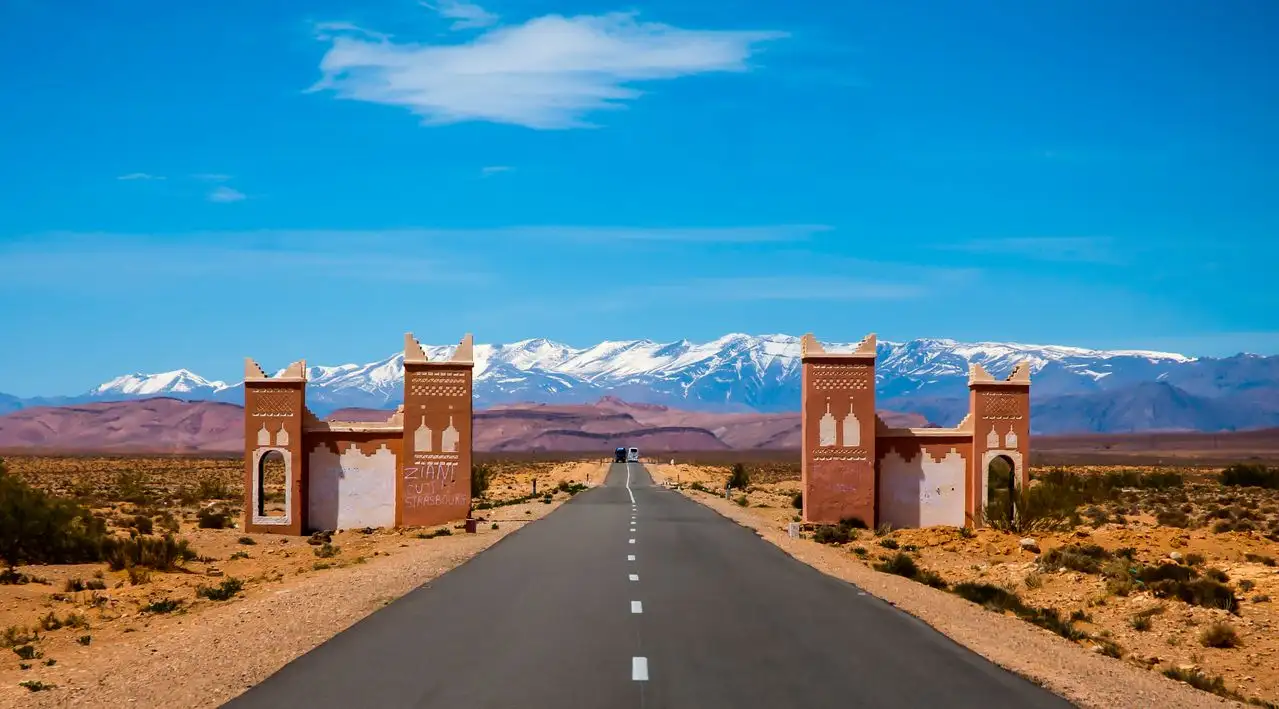
Morocco changes every three hours. Not metaphorically, but literally. Drive east from Marrakech across the High Atlas and the landscape changes completely before you reach the Sahara: the pink-walled medina gives way to Berber villages clinging to the mountain passes, then the palm groves and kasbahs of the Draa and Dades valleys, then the absolute silence of Erg Chebbi. This is a country that rewards attention to sequence rather than a mere checklist of highlights.
Most Morocco itineraries are built backwards. Someone lists the places they want to see, such as Fes, Chefchaouen, the Sahara and Marrakech, and then finds the fastest route to connect them. What they end up with is a trip that covers the distance without truly experiencing the country. Long driving days, one night in every city. A tannery seen from above for twenty minutes, and a desert camp with two hours in the dunes before the next departure.
The itineraries that work are built differently. They start with the question: how should this country feel on day seven? And they build backwards from there.
Why Fes Needs Two Days
Fes el-Bali is one of the largest car-free urban areas in the world, and its medina has been a UNESCO World Heritage Site since 1981. The medina has 9,000 alleys. At its centre sits the University of al-Qarawiyyin, founded in 859 CE by Fatima al-Fihri and named by Guinness World Records as the oldest continually operating higher-learning institution on earth. One morning with a licensed guide, which is what most five-day circuits allocate, is enough to cover the tanneries, the Bou Inania madrasa, and the main souk route. It is not enough to understand anything.
Two full days change the experience entirely. The first day follows a guide; the second day is your own. The medina at 7am before the stalls open is a completely different place from the medina at noon. The Mellah, the Jewish quarter, is almost always skipped on one-day circuits because there is not time. The Nejjarine fondouk museum, which houses one of the finest collections of woodworking tools in North Africa, requires an unhurried afternoon. Two days is the minimum. This is why every private Morocco tour we build gives Fes two days by default - and why the 15-day trip gives it three.
The Sahara calculation
A Sahara circuit from Marrakech means roughly eight to nine hours of driving in total - which is why we always spread it across two days each way, with stops, rather than pushing it into one long push. That is the honest calculation most circuits avoid. A 3-day tour includes one night in the desert. What that means in practice: is arriving at the camp in the late afternoon, taking a camel trek at sunset, dinner, sleep, sunrise, and then packing to leave by 8am to make the drive back. The desert is beautiful. It is also over.
Two nights changes the arithmetic. Day three has no plan: a sunrise walk on foot into the dunes, a long morning in the camp, an afternoon in a different direction. The desert stops being a box ticked and becomes a place stayed in. This is the version of the Sahara desert tour that people mean when they say it changed them.
The rhythm that most people discover too late
Every traveller who has visited Morocco more than once says the same thing about their first trip: they wish they had moved more slowly. Not to see less, but to experience it more slowly. The Dades Valley, one of the most extraordinary landscapes in the south, is skipped on three-day circuits and rushed on five-day circuits because there is not time. The Todra Gorge, where the canyon walls are ten metres apart and three hundred metres high, deserves an hour on the canyon floor at the right time of day. Instead, it usually gets a mere twenty minutes from the parking area.
The difference between a Morocco trip you remember and one you are proud of is almost always pace. Not fewer destinations. Better rhythm between them.
What this means for your itinerary
If you have four days, choose one arc and follow it properly, whether it is Marrakech to the Sahara and back, or Casablanca to Fes through the Imperial Cities. If you have eight days, the arc that works best for most people is Fes or Casablanca to Marrakech via the Sahara: one direction, two airports, no backtracking, with Fes getting two days and the desert getting two nights (our 8-day Morocco tours). If you have ten days, Chefchaouen and the north can be added without compressing either Fes or the desert. Finally, if you have fifteen days, Morocco can be understood rather than merely visited.
These are not marketing categories. They are the honest architecture of how this country works, built from more than a decade of designing tailor-made Morocco itineraries for people who come back to book a second one.
What guests say
They Explored Morocco with Us
FAQ
Frequently Asked Questions About Morocco Tours
Everything you need to know before planning your trip. Questions not answered here? Contact us directly and we will reply within a few hours.
Can you hire a private driver in Morocco?
Yes. A private driver in Morocco is the standard format for touring the country outside the major cities. Our drivers are licensed, English-speaking, and familiar with every route from the Atlas Mountains to the Sahara. On a private circuit, your driver stays with you for the full duration, handles all logistics, and is the person you call if plans change. This is different from hiring a taxi for a single day or booking a shared transfer. The driver becomes part of the journey, not just the transport.
How much does a private Morocco tour cost?
Private Morocco tour prices depend on three variables: group size, duration, and accommodation standard. As a guide: a 3-day Sahara circuit from Marrakech for two people costs from approximately 500 to 700 euros per person. An 8-day circuit from Fes to Marrakech for two costs from approximately 900 to 1,400 euros per person. For a group of four, the per-person price drops significantly since the vehicle cost is shared. Prices are quoted per vehicle for most formats, not per person, which makes private tours genuinely competitive for couples and families compared to group departures.
What is the best time to visit Morocco?
Spring, from March to May, and autumn, from September to November, are the most comfortable times to travel across Morocco. Temperatures are manageable in the desert, pleasant in the mountains, and ideal in the cities. Summer, from June to August, is hot in the desert and in the south but works well for the northern coast and Chefchaouen. Winter is cold in the Atlas Mountains and at altitude but is excellent for the Sahara, with clear skies and cold nights that make the desert more dramatic. There is no wrong time to visit Morocco if the itinerary is built around the season.
What is included in a Morocco private tour?
A Morocco private tour typically includes: a private vehicle with a driver for the full circuit, all accommodation, daily breakfast, a camel trek where the itinerary includes the Sahara, licensed medina guides for Fes and Marrakech, fuel, road tolls, and 24/7 support. Not included: international flights, lunches and dinners (except at the desert camp), travel insurance, monument entrance fees, and tips. Every itinerary we build specifies exactly what is and is not included before you confirm.
How many days do I need for Morocco?
Five days is the minimum for a complete one-way circuit combining one Imperial City and the Sahara. Eight days is the most popular format for a first trip: the Fes medina over two days, two nights at Erg Chebbi, the kasbah route, and Marrakech. Ten days adds Chefchaouen without compressing either Fes or the desert. Fifteen days covers the full country with rest days built in. If you have fewer than five days, the format changes: a 3 or 4-day circuit from Marrakech reaches the Sahara but does not include the Imperial Cities.
What is the difference between a private tour and a group tour in Morocco?
A group tour in Morocco runs on fixed dates, follows a set route, and moves at a pace determined by the group. A private tour has no fixed departure date, no shared vehicle, and no itinerary built around a compromise between different preferences. Your driver leaves when you are ready, stops where you want, and adjusts the day if your plans change. For families, this means children travel at their own pace. For couples, it means the Sahara sunrise is never shared with thirty strangers. For those with specific interests, it means the itinerary is built around what you actually want to see rather than what the standard circuit includes.
Is Morocco safe to visit right now?
Morocco is a safe destination for private travel. The country has a stable government, a well-established tourism infrastructure, and no specific travel advisories from the UK, US, or EU governments for most regions. Petty theft in busy medinas is the most common issue for tourists and is manageable with standard precautions. The private tour format adds a layer of security: you have a dedicated driver throughout, a local team available by phone, and an itinerary that avoids situations a first-time visitor might not anticipate. We monitor local conditions and adjust itineraries where necessary.
What is the best Morocco private tour company?
The best Morocco private tour company is one based in Morocco, not a reseller operating from abroad. Look for a company with a licensed local team, consistent reviews on both Google and TripAdvisor, and a process that builds your itinerary around your airports and travel style rather than a fixed departure schedule. Morocco-Tours.com has been organising private circuits from Marrakech since 2011, with a 4.9-star average rating across more than 5,000 tours. The difference from booking through a platform is direct contact with the team planning your trip from day one.
_1793050830.webp)
Ready to go?
Plan Your Morocco Trip
Tell us your departure airport, your return date, and how many days you have. We will send a complete private itinerary within 24 hours - with trusted advice on what to include and what to save for a second visit.
- Free itinerary within 24h
- 100% private tours
- No payment to inquire
- Licensed local guides