 Coast → SaharaCoast → Sahara
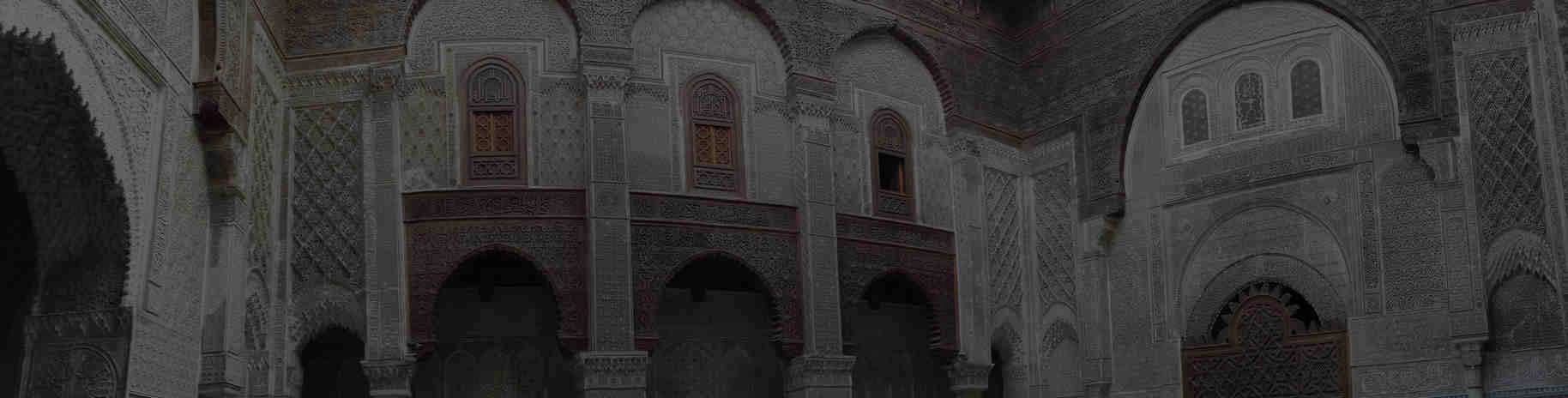
Private tours departing from your Agadir hotel, from Atlantic day trips to multi-day desert expeditions. All private and customizable.
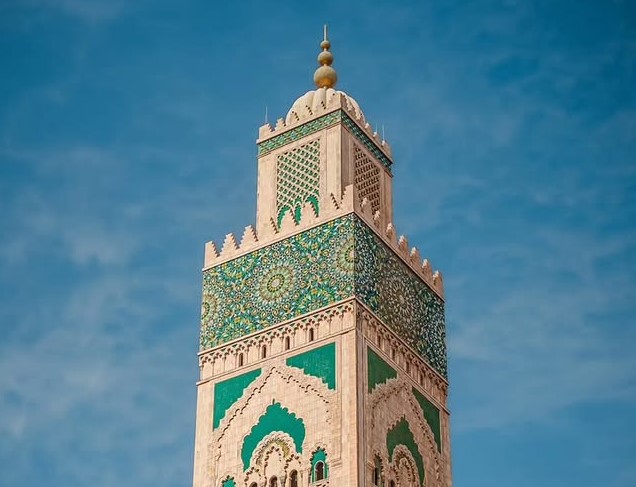
If you have already done the Sahara circuit from Marrakech, Agadir gives you the Morocco that comes after: smaller, quieter and almost untouched by mass tourism. The road from here leads to the Anti-Atlas, to the wild dunes of Erg Chigaga, to the palm oases of the Drâa Valley and to an Atlantic coast that most visitors never see.
Agadir opens onto four distinct territories. South-east, the Tata road runs toward Foum Zguid and the piste into Erg Chigaga without touching Ouarzazate. North-east, the kasbah route reaches Aït Benhaddou and the Drâa Valley. East, Taroudant, Taliouine and Tafraoute sit in the Anti-Atlas. South and north, the Atlantic coast runs from Mirleft and Sidi Ifni to Essaouira.
Agadir is also a practical end point. It sits about three hours from Marrakech by motorway, so a one-way route from Marrakech or Fes can finish here with no backtracking, and the reverse works just as well. Flying into Agadir and out of Marrakech uses two of Morocco's busiest airports and saves a full day of driving.
Our drivers know these southern roads in every season: the Tata road, the piste conditions around Foum Zguid, the families who run the guesthouses in Tissint and Tata. Since 2011, that local knowledge has been the difference between a tour that follows a map and one that follows the right road on the right day.
Agadir opens onto four distinct territories. Each is a journey in itself, not a day trip dressed up as a circuit.
The most direct Sahara approach from Agadir. The road south-east crosses the Anti-Atlas foothills to Tata, a palm oasis. Tissint, further on, has a narrow gorge with date palms and a seasonal waterfall. Foum Zguid is the last tarmac town before the two-hour piste into Erg Chigaga. Far fewer tourists use this route than the Ouarzazate approach. Plan a minimum of 4 days from Agadir.
The road north-east from Agadir passes Taroudant and crosses the Atlas foothills to Ouarzazate. From there the kasbah route reaches the Aït Benhaddou ksar, then runs south down the Drâa Valley through continuous date-palm oasis, with ancient ksour at Agdz, Tamnougalt and Zagora. This is the classic southern Morocco circuit: more infrastructure than the Tata route and just as photogenic.
Taroudant lies about 80 km east: a walled medina with intact pink ramparts, few tourists and a Thursday souk that draws Berber farmers from the surrounding Souss. Taliouine, at 1,200 m, is Morocco's saffron capital, and its cooperative welcomes visitors. Tafraoute sits in a bowl of smooth pink granite, with the Painted Rocks (1984), the Aït Mansour gorge and almond blossom in January. It works as a 2-3 day loop or as the first leg of a longer desert circuit.
South of Agadir: Tiznit, a silver town with its 19th-century ramparts; Mirleft, a surf village on a clifftop; Sidi Ifni, a former Spanish enclave with art-deco architecture and a working port; and Legzira, a red stone arch on a tidal beach. North of Agadir, Essaouira is about 2.5 hours away, with its 16th-century Atlantic medina and fishing port. Both directions work as day trips and are better as overnights.
Our take:
Two directions set Agadir apart from any other Moroccan starting point: the Tata road to Erg Chigaga in the south-east and the Zagora and Drâa route in the north-east. Combining both in one trip from Marrakech means a long detour, while from Agadir they fit into the same week.
We run private tours from every major Moroccan airport. The southern circuits can also be reached from Marrakech, and Agadir works well as an end point for one-way tours.
Both routes start in Agadir and end at the Sahara. What they show you on the way is completely different.
South-east from Agadir through the Anti-Atlas foothills to Tata, then on to Tissint and Foum Zguid, the gateway to Erg Chigaga by piste. Almost no tour groups use this road. The landscape shifts from argan plains to red rock gorges to desert plain. Chigaga has fewer camps than Erg Chebbi and a different character: wider, quieter and harder to reach.
North-east from Agadir to Taroudant and Ouarzazate, east to Aït Benhaddou, then south down the Drâa Valley through its palmeraie to Zagora. More infrastructure, more cultural stops and the most complete picture of southern Morocco: kasbahs, oases and the pre-Sahara. Best for first-time visitors to the south.
Our take:
First time in southern Morocco: take the Zagora and Drâa route. Second time, or if you want Erg Chigaga without the crowds: take the Tata route. We can also combine both in a 7-8 day loop, out via Tata and back via Ouarzazate and the Drâa.
The stops and moments across the south and south-east, most of which appear on no standard Morocco itinerary.
Reached only by 4x4 piste from Foum Zguid or M'Hamid. It has fewer camps than Erg Chebbi, larger dunes in parts and almost no day-trippers. The approach from Agadir via Tata avoids the Ouarzazate tourist circuit entirely. Bivouac nights here have very little light pollution, so the Milky Way shows clearly.
South of Tata, a narrow palm-lined gorge with a seasonal waterfall and a small settlement where the river runs underground. Tissint became known internationally in 2011 when a meteorite fell here and was recovered by local families. The gorge walk takes about 45 minutes and is spectacular for how few people know it.
About 80 km east of Agadir, enough for a half day or a full day depending on pace. Intact pink ramparts enclose one of Morocco's least touristy working medinas. The Thursday souk draws Berber farmers from the surrounding Souss, and a horse-drawn calèche ride around the walls is the standard way to see them.
At 1,200 m, between Taroudant and Ouarzazate, the cooperative produces saffron that is harvested by hand each October and November. Visits show the drying, grading and tasting, and the director explains how to tell genuine Moroccan saffron from the fake kind sold in many souks. Forty minutes that change every later saffron purchase.
A bowl of smooth rounded granite at about 1,200 m in the Anti-Atlas, pinkish in morning light. The artist Jean Vérame painted the largest boulders in blue and red in 1984, and they are still visible. The Aït Mansour gorge to the south has a palm grove along a river that disappears underground. Best in late January, when almond blossom fills the valleys. It needs an overnight.
A former Spanish enclave returned to Morocco in 1969, with colonial art-deco buildings on an Atlantic cliff and a port where sardine boats still come in each morning. Legzira, a short drive north, has a red stone arch standing on the tidal beach.
A small village on a clifftop above three beaches: one for swimming, one for surf, one for solitude. A handful of small guesthouses make it the quietest overnight option on the Atlantic south of Agadir. Good for families, photographers and anyone who finds Agadir's resort scale too large.
The argan tree grows almost only in the Souss Valley between Agadir and Taroudant, the origin of argan oil. Our drivers know which cooperatives are genuinely woman-run rather than tourist storefronts. The pressing is done by hand, and the difference in quality and price from what is sold in many souks shows immediately.
All logistics handled by our southern Morocco team: hotel pickup, experienced desert drivers and 4x4 vehicles for piste routes.
A private vehicle collects you from your Agadir hotel, beach resort or the airport. A 4x4 is used for desert and piste routes, and an air-conditioned car for city and coast circuits.
Drivers from the Souss and the southern routes who know the Tata road in every season, the piste around Foum Zguid and the families in the Tissint gorge. English-speaking, with French and Spanish on request.
Riads in Taroudant, guesthouses in Tata and Tissint, private desert camps at Chigaga. All chosen for character, with standard, comfort and luxury bivouac options.
Our team is reachable throughout the trip, for piste condition updates, itinerary changes, or finding a guesthouse in a village with no online presence.
Three routes at different lengths and directions from Agadir. Day-by-day plans on request.
Day 1: Tiznit silver souk, overnight in Mirleft. Day 2: Sidi Ifni art-deco, the Legzira arch, back in Agadir by evening.
Day 1: Taroudant and Ouarzazate. Day 2: Aït Benhaddou and the Drâa Valley drive. Day 3: Zagora and a camel ride. Day 4: return west.
The full wild south loop: Anti-Atlas, the Tata road, the Chigaga piste and a return through the Drâa. Very little tourist infrastructure for four days.
What guests say
Common questions
From Agadir you can reach three main directions: the Sahara desert via Tata, Foum Zguid and Erg Chigaga (4-6 hours south-east), the Anti-Atlas mountains including Taroudant, Taliouine and Tafraoute (1.5-3 hours east), and the Atlantic south coast including Mirleft, Sidi Ifni and Legzira (1.5-2 hours south). Essaouira is about 2.5 hours north. Agadir is Morocco's southern hub and the best starting point for everything south and west of the High Atlas.
The most direct route from Agadir to Erg Chigaga runs south-east via Taroudant and Tata, then Tissint and Foum Zguid, about 6 hours of driving. Foum Zguid is the last tarmac town before the 4x4 piste into Erg Chigaga, which takes about 2 more hours off-road. The alternative via Ouarzazate and M'Hamid El Ghizlane is longer but passes Aït Benhaddou. Plan a minimum of 4 days from Agadir for a proper Chigaga circuit.
Yes. Taroudant is about 80 km east of Agadir and one of the most underrated medinas in Morocco. Its intact pink ramparts enclose a working city with two busy souks and little tourist infrastructure. The Thursday market draws Berber farmers from the surrounding Souss. It is a natural first stop on any circuit east or south from Agadir and works as a half-day visit or an overnight base.
The Tata route runs south-east from Agadir through the Anti-Atlas foothills to Tata, a small oasis town at the edge of the Sahara. From Tata the road continues to Tissint, known for its palm-lined gorge and for the 2011 meteorite fall, and then to Foum Zguid, the gateway to Erg Chigaga. It is the most direct Sahara approach from Agadir and crosses landscapes that few European tourists visit.
One to two days covers the Atlantic south (Sidi Ifni, Legzira, Mirleft). Two to three days covers the Anti-Atlas (Taroudant, Taliouine, Tafraoute). Four to five days reaches Erg Chigaga via Tata. Six to eight days covers a full southern circuit through the Anti-Atlas, Tata, Chigaga, Zagora and the Drâa Valley. Agadir also works as an end point for one-way tours from Marrakech, Casablanca or Fes.
Yes. Sidi Ifni is about 1.5 hours south of Agadir. The former Spanish enclave has colonial art-deco architecture and a working Atlantic port. Legzira, a short drive north of Sidi Ifni, has a red stone arch standing on the tidal beach. Mirleft, between Agadir and Sidi Ifni, is a small surf village. A day trip covers all three, and an overnight in Mirleft or Sidi Ifni is worth it for the Atlantic light at dusk.
Erg Chigaga is the wilder, less visited of Morocco's two main dune systems. It lies near M'Hamid El Ghizlane and is reached only by 4x4, with about 2 hours of piste from Foum Zguid or M'Hamid. Erg Chebbi, near Merzouga, has more infrastructure and easier access. Chigaga has fewer camps, larger dunes in places and almost no day-trippers. From Agadir, Chigaga is the more natural destination, because the Tata route approaches it from the south without passing through Ouarzazate.
October to April is the main season, with comfortable temperatures across the south and cool nights in the Anti-Atlas. January and February bring almond blossom to the Tafraoute area, and October and November are the saffron harvest at Taliouine. Summer is very hot inland, especially around Tata and the Drâa Valley, so we avoid southern and desert circuits in summer and plan the Atlantic coast instead, which stays pleasant year-round.
Yes. Agadir and Marrakech are about 3 hours apart by motorway. The most popular combination is to fly into Agadir, make a circuit south through the Anti-Atlas and the Sahara, and end in Marrakech or Fes, or to do the reverse. Both one-way routes remove backtracking and use two of Morocco's busiest international airports.
Every private tour from Agadir includes a private air-conditioned vehicle (4x4 for desert and piste routes), an experienced driver, all accommodation, daily breakfast, Agadir hotel pickup and drop-off, fuel, road tolls and local taxes, and 24/7 support. Not included: international flights, lunches and drinks, travel insurance, monument entrance fees and tips.
Tell us when you're arriving in Agadir, how many days you have and which direction calls you: the Sahara via Tata, the Zagora palmeraie, the Anti-Atlas or the Atlantic south. We'll send a tailor-made itinerary within 24 hours. No obligation, no pushy sales. Just our experience on these southern roads since 2011.