


The four imperial cities are not a single style of place. Fez feels medieval — its 9,000 alleyways have barely shifted since the city was founded in 789. Marrakech is the opposite: louder, hotter, more theatrical, organised around Jemaa el-Fna where storytellers and snake-charmers still work at sunset. Meknes is the smallest and the least visited, also known for having the longest ramparts in Morocco. Rabat is the modern capital, the ocean on one side, twelfth-century kasbah on the other.
What links them is History. Marrakech was the Almoravid capital from 1062. Fez was already the Idrisid capital by then. Meknes had its moment under Moulay Ismail, a contemporary of Louis XIV, in the late 1600s, when he tried to build a Versailles in earthen-walled stables and palaces. Rabat became the capital twice — first in the twelfth century, then again in 1912 under the French Protectorate. Walking through them in sequence is the closest you can get to walking through Moroccan history in chronological order.
This is what travelers tend to remember afterward: the smell of cedar wood and warm bread in a Fez derb at 8 in the morning, mint tea served on a Marrakech rooftop at dusk, the absolute quiet inside the Mausoleum of Moulay Ismail, and the Atlantic wind on the ramparts of Rabat's Kasbah des Oudayas.
We've been organising private tours through the imperial cities for fifteen years. Our job is to handle the route, the riads, the drivers and the expert medina guides. Yours is simply to take your time and live in each city before moving to the next.
Four cities, four dynasties, four very different atmospheres. Here's what to expect inside each — and what makes it worth its place on the route.

Pink ramparts that turn copper at sunset. Orange-blossom courtyards hidden behind anonymous medina doors. Jemaa el-Fna at dusk — storytellers, snake-charmers, and food stalls firing up, all under the Koutoubia minaret. Marrakech is the loudest, hottest, and most theatrical of the four imperial cities — capital under three dynasties since 1062, and gateway to the Atlas Mountains and the Sahara Desert.

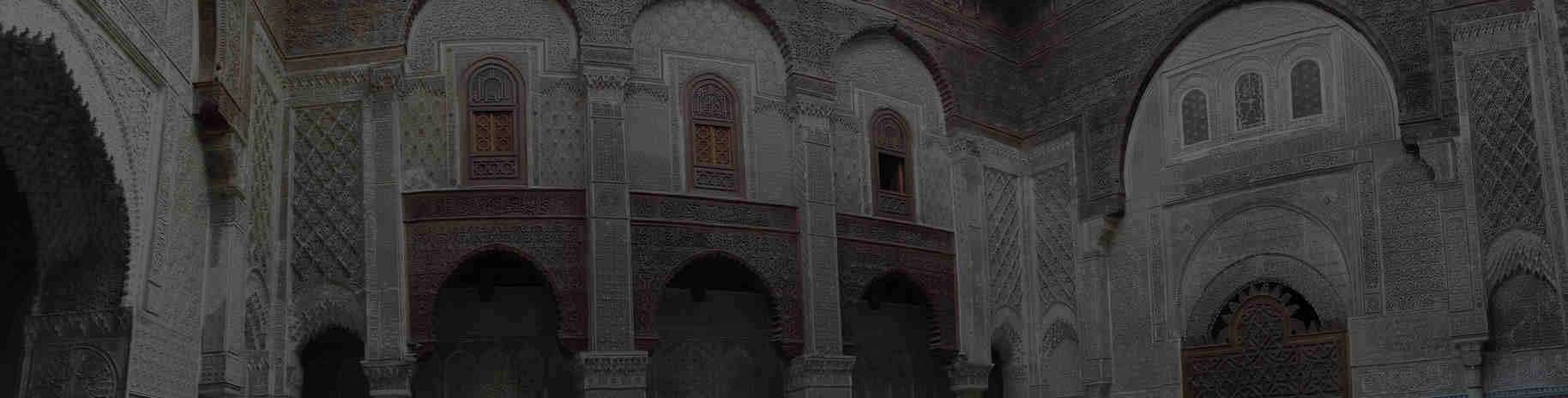
Walk in at 7:00 AM, and the only sounds are donkey hooves on stone, copper-beaters at Place Seffarine, and the muezzin from Al-Qarawiyyin. Founded by Idris I in 789, the medina hasn't structurally changed since the 12th century — 9,000 alleyways, no cars, dye pits still in the same hands. Morocco's oldest imperial city, and the slowest to give itself up.

The quietest of the four imperial cities — featuring wide olive groves outside the monumental walls, a medina that empties by mid-afternoon, and absolute silence inside the Mausoleum of Moulay Ismail. Founded in the 11th century by the Almoravids, the city was later rebuilt by the Alawite Sultan as his Versailles between 1672 and 1727, erecting forty kilometres of ramparts, granaries that could feed an army, and Bab Mansour, the biggest gate in North Africa. Most tour groups skip most, the travelers who don't usually remember it most.

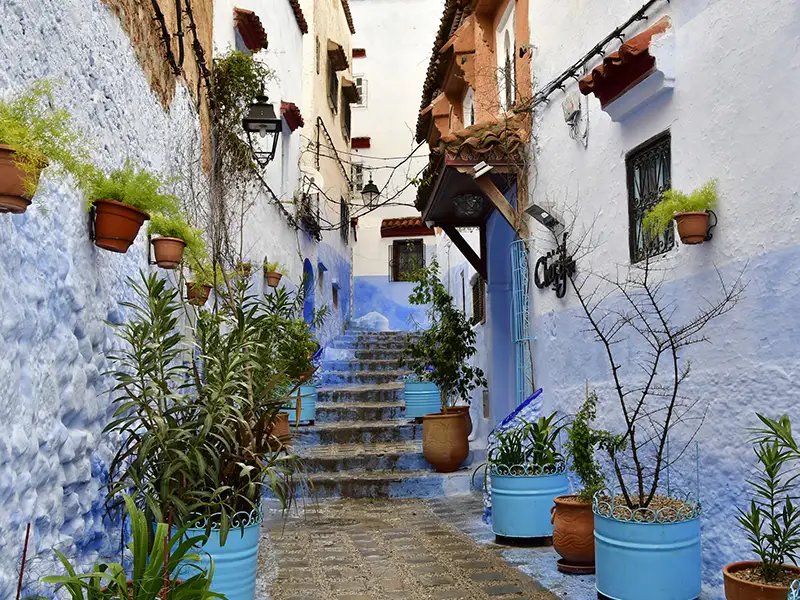
Short paragraph describing this card.Atlantic wind on the ramparts. White-and-blue houses inside the Kasbah des Oudayas, and bougainvillea climbing over Andalusian walls. Capital since 1912, today Rabat is the royal seat, home to embassies, the modern tramway, and the cafés along Avenue Mohammed V. Remarkably clean, green, and calm, it has been a UNESCO World Heritage site since 2012, and the only imperial city on the ocean.
All four imperial cities have an international airport (direct or with a connection), so you can start your journey from any of them. While most travelers begin in Casablanca, Marrakech, or Fez, we organise tours starting wherever your flight lands.
The stops that define circuits departing from CMN: from the Hassan II Mosque to the Fes tanneries to the Sahara bivouac.
The third-largest mosque in the world, built on a promontory over the Atlantic, half the floor is glass, and the ocean is visible below. Open to non-Muslim visitors with a licensed guide (guided tours 9am-3pm, closed Friday mornings). The minaret, at 210m, is the tallest religious structure in Africa. It is well worth 2 hours, even for travellers who pass through Casablanca briefly.
1 hour north of Casablanca. UNESCO World Heritage since 2012, featuring the Hassan Tower (an unfinished 12th-century minaret), the Kasbah des Oudayas (an Almohad fortification overlooking the river mouth), and the Chellah (a ruined Roman and medieval site at the city's edge). Smaller and more navigable than Fes; often skipped and worth a half-day.
The most intact medieval Islamic city in the world, UNESCO 1981. The Chouara tanneries (leather-dyeing in stone vats, visible from the balconies above), the Bou Inania Madrasa (14th century, the finest example of Marinid architecture), the Al-Qarawiyyin Mosque (founded 859, its associated university is the oldest in the world). Requires a licensed guide and a two mornings minimum, not one rushed day.
The largest Roman site in North Africa, UNESCO 1997. 30 minutes from Meknes, 1 hour from Fes. The Orpheus mosaic and the Twelve Labours of Hercules are still in situ. Arriving early, before the coach tours, transforms the experience. See the Arc de Triomphe of Caracalla, the Capitol, and the basilica in the horizontal morning light. Allow 2 hours on site with a specialist guide.
2 hours south of Casablanca on the Atlantic. A protected lagoon producing the finest oysters in Morocco, warm, calm water, and almost no tourists outside the summer. The oyster farms sell directly from the water's edge; a dozen No. 3 oysters with lemon costs €6. The single quality hotel on the lagoon edge is the best value coastal overnight in Morocco.
The Bahia Palace's stuccoed ceilings. The Saadian Tombs sealed for two centuries until 1917. The Bou Inania Madrasa. Moulay Ismail's Mausoleum. The Hassan Tower above the Bou Regreg. The Roman mosaics at Volubilis — that is five UNESCO World heritage sites across four historic cities.
1 hour south of Casablanca. The 16th-century Portuguese Mazagan cistern, a vaulted underground chamber originally built for water storage, which now reflects the arched ceiling in a permanent shallow pool. Orson Welles filmed the opening scene of Othello here in 1952. The surrounding fortified city (UNESCO 2004) takes a full morning to walk properly.
The French Protectorate (1912-1956) produced one of the most concentrated collections of Moorish and Art Deco architecture in the world, the 1930s apartment buildings of the Maarif and Habous quarters, the Central Market, the Post Office, and the old courthouse. A walking tour of the city centre takes 2 hours and requires no guide; most buildings are accessible from the street.
A full day's drive to the south-east from Casablanca when traveling via Fes or via Marrakech and Ouarzazate. The most natural structure: Casablanca → Fes (overnight) → Middle Atlas crossing → Merzouga (2 nights in camp) → return north or south through the kasbah route. The Sahara from Casablanca is a chapter in a larger circuit, not a day trip, it requires 3-4 days minimum to justify the distance.
CMN airport or city hotel pickup, private vehicle for the full journey, and all logistics handled by our team.
Private vehicle from CMN arrivals hall or any Casablanca city hotel. The driver meets you at the gate with your name. No shared transfer, no waiting for other passengers.
The same driver accompanies you for the entire journey, no handoffs between cities. English by default; French, Spanish, Italian, German on request. Our drivers are specialists in long-circuit driving and navigation.
Licensed guides in Rabat, Fes, Meknes, and Marrakech for the medina days, officially certified by the Moroccan Ministry of Tourism. Separate from the driver-guide and selected for their specific city expertise.
Our team is always reachable for itinerary changes, accommodation adjustments, or anything that comes up on the road. Grand circuits from Casablanca regularly include last-minute adjustments; and we are fully structured to handle them.
Three routes at different lengths. Day-by-day plans on request.
Day 1: Hassan II + Rabat. Day 2: Meknes + Volubilis. Day 3-4: Fes medina over two mornings. Fly out from Fes.
View full itinerary → →Fes medina, Middle Atlas crossing, 2 nights Sahara, kasbah route, Marrakech. One-way CMN → RAK.
Explore this route → →The complete Morocco circuit. North, Mediterranean, desert, south, Atlantic. One-way CMN → RAK with optional Essaouira finish.
See detailed plan → →
What guests say
Tell us when you want to travel, what you want to see, and how you like to move. We will shape a Morocco itinerary around your rhythm, interests, and comfort level.