On this page
- 1. The Short Answer
- 2. What Things Actually Cost
- 3. A Daily Budget by Travel Style
- 4. Where Morocco Gets Expensive
- 5. Tourist Prices and Bargaining
- 6. Is a Private Tour Worth the Price?
- 7. How to Save Without Spoiling the Trip
- 8. Money Basics: Dirhams, Cards and Tipping
- 9. Frequently Asked Questions
Is Morocco expensive? For most travelers from the US, UK and Europe, everyday costs such as meals, local transport and riads are lower than at home, but the answer changes quickly once you add flights, long distances, luxury stays and tourist-priced excursions. It's a fair question, because the same country can feel very cheap in one moment and surprisingly costly in the next, and the final bill depends on how you travel, from an independent budget trip to fully arranged private tours or a tailor-made trip.
The honest answer is that Morocco is good value if you know where the money goes. Here is how costs break down, what drives them up, and how to plan around them, based on what we've seen since 2011.
The Short Answer
Morocco is not an expensive country by Western standards, but it isn't the bargain it was a decade ago either. Prices have risen, especially in Marrakech and in the most visited riads, and a first-time visitor often pays more than a local for the same thing. As a rule of thumb:
- Feels cheap: local meals, mint tea, short taxi rides, public buses and trains, hammams, handmade goods after bargaining, mid-range riads outside peak season.
- Feels expensive: alcohol, imported goods, car rental in high season, the top luxury riads, and tourist excursions priced before any negotiation.
- Costs the same as anywhere: international flights and five-star hotels.
What Things Actually Cost
The table below gives indicative prices in Moroccan dirhams (MAD), with a rough conversion at around 10 MAD to the US dollar, 11 to the euro and 13 to the pound. They are ranges compiled from several recent travel cost guides, and they vary by city, season and how touristy the street is. Treat them as a guide, not a quote.
| Item | Typical price (MAD) | Roughly (USD) |
|---|---|---|
| Mint tea or coffee in a cafe | 10 to 20 | $1 to $2 |
| Tagine or couscous in a local restaurant | 50 to 90 | $5 to $9 |
| Dinner in a riad or mid-range restaurant | 150 to 300 | $15 to $30 |
| Bottled water (1.5 L) | 6 to 8 | Under $1 |
| Beer in a licensed restaurant | 30 to 50 | $3 to $5 |
| Petit taxi within a city | 15 to 40 | $1.50 to $4 |
| Local hammam | 20 to 50 | $2 to $5 |
| Spa hammam with massage | 300 to 800 | $30 to $80 |
| Budget riad, double room | 350 to 600 | $35 to $60 |
| Mid-range riad, double room | 800 to 1,500 | $80 to $150 |
| Luxury riad or hotel, double room | 2,500 and up | $250 and up |
A Daily Budget by Travel Style
A daily figure is only useful if you know what it covers. The ranges below are per person, for a couple sharing a room, and they include a room, meals, local transport and a couple of activities. They leave out international flights and a private vehicle.
| Style | Per person per day (MAD) | Roughly (USD) | What it looks like |
|---|---|---|---|
| Budget | 400 to 600 | $40 to $60 | Simple riad or guesthouse, local food, buses and trains |
| Mid-range | 900 to 1,500 | $90 to $150 | Comfortable riad, restaurant dinners, some guided activities |
| Luxury | 2,500 and up | $250 and up | High-end riads or hotels, private drivers and guides, spa time |
The jump between the styles comes almost entirely from where you sleep and how you move around. Food and local transport stay cheap at every level, while accommodation and private services drive the totals.
Where Morocco Gets Expensive
Visitors who call Morocco expensive are usually describing one of these situations:
- Alcohol and imported goods. Alcohol is heavily taxed, and prices are often close to what you'd pay in the UK or Europe. Imported food, cosmetics and electronics cost more than at home.
- Peak-season accommodation. Well-known riads in Marrakech charge noticeably more around Christmas, New Year, Easter and the spring and autumn peaks.
- Distances. Morocco is bigger than most visitors expect. A route across several regions means long drives, and transport becomes one of the largest costs on a longer trip.
- Car rental. Rates can be high in busy periods, and fuel, tolls and parking add up.
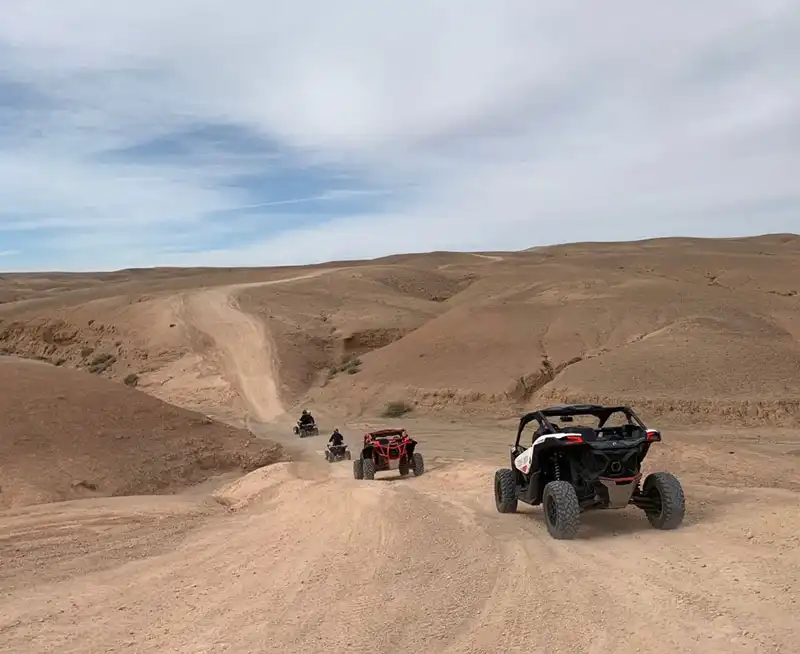
- Excursions sold on the street. The first price quoted for a desert trip, a camel ride or a day out is often well above what the same thing costs through a reliable operator.
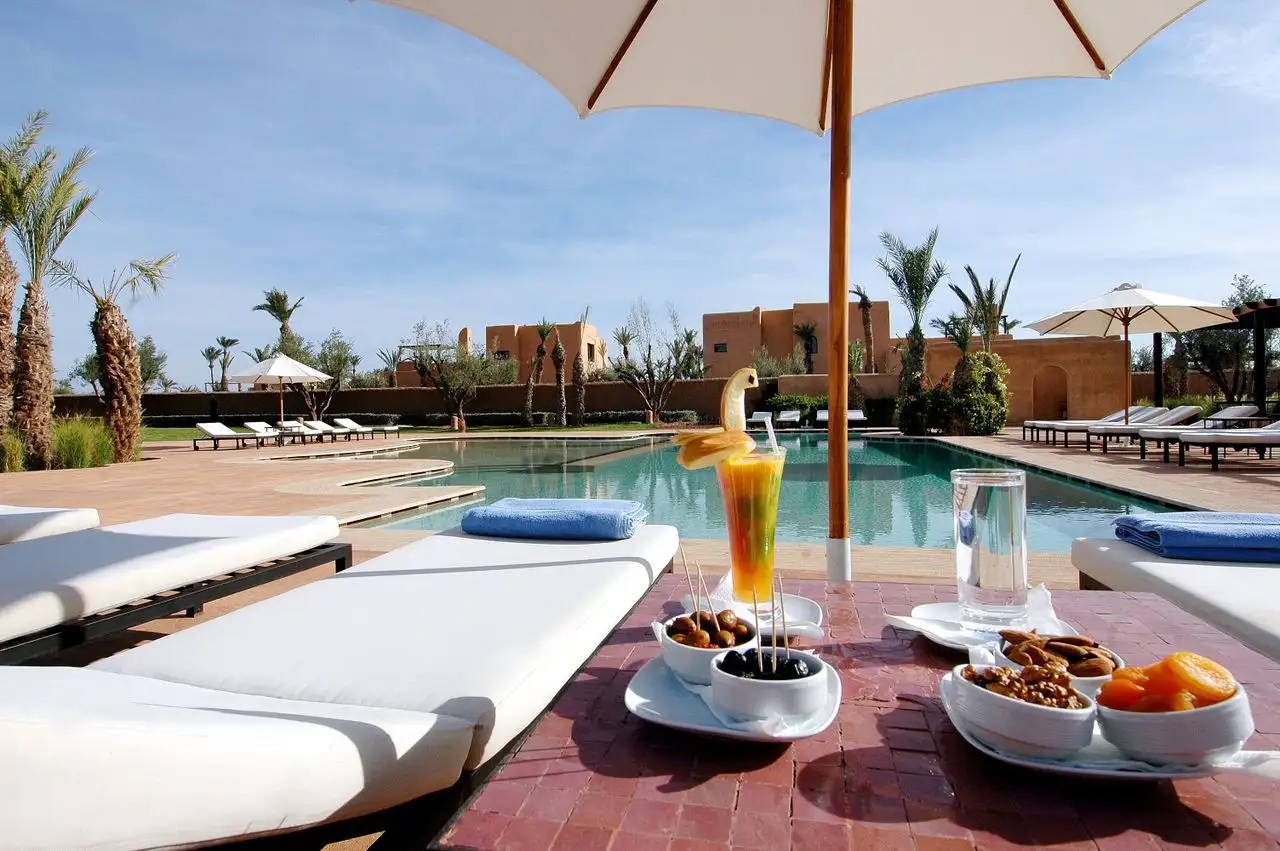
- Luxury stays. The top end is priced like the rest of the world, with the best riads and desert camps running to hundreds of dollars a night.
Tourist Prices and Bargaining
A common complaint is that Moroccans quote visitors higher prices than they quote locals, and this is true in the souks, with taxi drivers and with informal guides. It's less personal than it feels. In a market where almost nothing has a price tag, the first number is an opening offer, and negotiation is expected.
A few habits make a difference. Decide what an item is worth to you before you start, and walk away politely if the price doesn't fit. Agree the fare before you get into a taxi unless the meter is running. Shops with fixed prices, which you will often see in modern malls and cooperatives, don't bargain. And keep it fair: pushing a handmade price too low costs the artisan who made it, so aim for a price you're both comfortable with rather than the lowest possible one.
Is a Private Tour Worth the Price?
If you are traveling alone on a tight budget and staying in one city, doing it yourself is almost always cheaper. Once you add distances, the desert and a limited number of days, the picture changes. A private vehicle with a driver replaces buses, trains, taxis and the time lost between them, and it's the only practical way to reach many places outside the main cities.
The cost per person also falls as the group grows, because the vehicle and driver are shared between everyone in the car. A family of four or two couples traveling together pays far less per head than a solo traveler. The comparison between a private trip and a group tour comes down to what is included, the size of your group and how much flexibility you want. What moves the price of a private tour most is the accommodation level, the season, the length and the desert camp you choose.
How to Save Without Spoiling the Trip
The smartest savings come from planning, not from cutting corners. These are the changes that make the biggest difference:
- Travel in the shoulder months. Accommodation and flights are cheaper outside the main peaks, and the weather is often better. The best time to visit Morocco depends on the region, so match the month to your route.
- Fly on the right days. Flights are usually the largest single cost, and picking the cheapest month to fly to Morocco and the right days of the week can save a lot.
- See fewer places. Every extra city adds a long drive and another night. Two or three well-chosen bases are cheaper and more relaxing than five.
- Eat where locals eat. A plate of tagine in a neighborhood restaurant costs a fraction of the same dish near the main square.
- Mix budgets. Splurge on one special night, such as a desert camp, and keep the rest simple.
- Book the big pieces in advance. A pre-arranged route avoids paying premium prices for last-minute vehicles and rooms.
Money Basics: Dirhams, Cards and Tipping
The Moroccan dirham is a closed currency, which means you generally can't change it back outside the country. The UK government's entry requirements for Morocco describe it as a "non-convertible" currency, and note that you must declare foreign currency of 100,000 dirhams or more when entering or leaving. In practice, exchange only what you expect to spend, and spend or change back what's left before you go.
Cards are widely accepted in hotels, larger restaurants and shops in the main cities, while cash is still the norm in the souks, cafes, taxis and small towns. ATMs are easy to find, though some charge a fee. A tip of around 10 percent is usual in restaurants, and small amounts of 20 to 50 dirhams for porters, drivers and spa staff are appreciated.
Frequently Asked Questions
Is Morocco expensive for tourists?
Not by Western standards. Meals, local transport, hammams and mid-range riads cost less than at home. Flights, alcohol, imported goods, car rental and luxury stays are the exceptions.
How much money do I need per day in Morocco?
As a guide, a budget traveler might spend 400 to 600 dirhams a day, a mid-range traveler 900 to 1,500 and a luxury traveler 2,500 or more. These figures exclude flights and a private vehicle.
Is Marrakech more expensive than the rest of Morocco?
Generally yes. It's the most visited city, with higher prices for riads, restaurants and excursions. Smaller towns and rural areas are usually cheaper, although remote regions can cost more to reach.
Is food expensive in Morocco?
No. A local meal costs a few dollars, and a three-course dinner in a good restaurant is usually well below the price of the same meal in the UK or the US. Alcohol is the exception.
Is it cheaper to book a tour or travel independently?
Independent travel is cheaper for solo travelers who stay in one place. A private tour can offer better value for longer routes, groups of three or four, and trips that include the desert, where getting around alone is slow and costly.
Should I bargain in Morocco?
Yes, in the souks and for taxis without meters. Start by deciding what the item is worth to you, stay polite and aim for a fair price rather than the lowest one. Shops with fixed prices do not bargain.
Written by
Said, Senior Guide and co-founder of Morocco Tours. A former mountain guide, Said has been a guide certified by Morocco's national tourist office since 2009.
Every budget is different. Tell us your dates, how many of you are traveling and the range you have in mind, and we'll build the route and the accommodation around it.
_1793050830.webp)