
On this page
The question we hear most often from older travelers isn't about riads or itineraries. It's simpler than that: how much walking is there, really, and will I be able to manage it? It's a fair worry. Plenty of tour descriptions promise "minimal walking", and then the first medina turns out to be a maze of uneven lanes, steps and mopeds.
The honest answer is that Morocco asks less of you than you might fear on most days, and more than the brochures admit on a few of them. What matters is knowing which days are which. Here is what we've seen work, and what doesn't, since 2011.
The Honest Answer
On a private tour, the car covers the distances between cities, and the walking is concentrated in a handful of places: the old medinas, a few historic sites, and the walk to a desert camp. Most days include one or two walks, each broken up by time in the vehicle, a long lunch or a rest back at the hotel.
The days that ask the most are the medina days, Fes above all, and the days you climb into a kasbah or reach a desert camp. Everything else is closer to a gentle city stroll than to a hike. Planned with that in mind, a Morocco trip is realistic for many travelers in their sixties, seventies and beyond.
Where the Walking Actually Happens
The medinas are the heart of the matter. UNESCO's listing for the Medina of Marrakesh describes roughly 700 hectares of lanes, houses, souks and workshops, while the Medina of Fez is described as one of the most extensive and best conserved historic towns of the Arab-Muslim world. Nobody walks all of that, and nobody should try.
The table below is our own assessment of an unhurried visit with a private driver and guide. It reflects a relaxed pace, not a fitness test.
| Stop | Walking load | What it involves | What helps |
|---|---|---|---|
| Marrakech medina and souks | Moderate | Crowded, narrow lanes, mopeds, a few steps at the palaces and tombs | Go early, plan one area per outing, stop for tea on a terrace |
| Fes medina | High | The biggest maze, sloping lanes, uneven stone, donkeys and carts | Half a day at most, pick-up at a different gate so you never retrace your steps |
| Rabat, Meknes and Volubilis | Low to moderate | Mostly level squares and esplanades, Volubilis is an open site with little shade | Morning visits, hat, water, short loops |
| Chefchaouen | Moderate to high | Short distances but a hilly medina with many steps | Stay near the entrance, explore the lower lanes only |
| Essaouira | Low | A flatter medina than the others, with a sea breeze, steps only on the ramparts | An easy day to schedule after a heavy one |
| Aït Benhaddou | Moderate | An uneven, steep path inside the kasbah | Climb only as far as you like, the view from below is already rewarding |
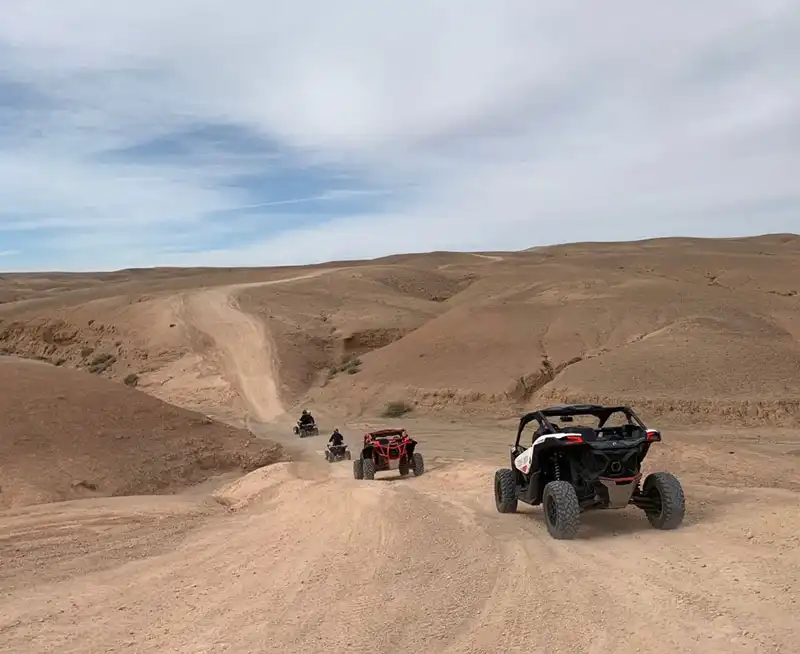
| Merzouga desert camp | Low to moderate | Soft sand between the vehicle and the tent, the camel ride is optional | Ask whether a 4x4 transfer is possible and request a tent close to the dining area |
Terrain Matters More Than Distance
Most first-time visitors ask how many kilometers they'll walk. It's the wrong question. A flat kilometer along the seafront in Essaouira is easy. A few hundred meters through the Fes medina, on worn stone, with a donkey cart squeezing past, is a different effort altogether.
What actually tires people is the surface and the stop-start rhythm: cobbles and uneven paving, stone steps without handrails, sudden slopes, and the constant need to watch your footing and step aside for carts and mopeds. Good walking shoes with grip matter far more than stamina, and a folding walking pole is worth packing if you're even slightly unsure on uneven ground. Our guide on how to dress for a tour in the Moroccan desert covers footwear and layers in more detail.
A guide who knows the medina also makes a real difference. A good one chooses the wider lanes, paces the route around shade and rest stops, and knows where a seat and a glass of mint tea are waiting at the end of a climb.
Riads, Stairs and Luggage
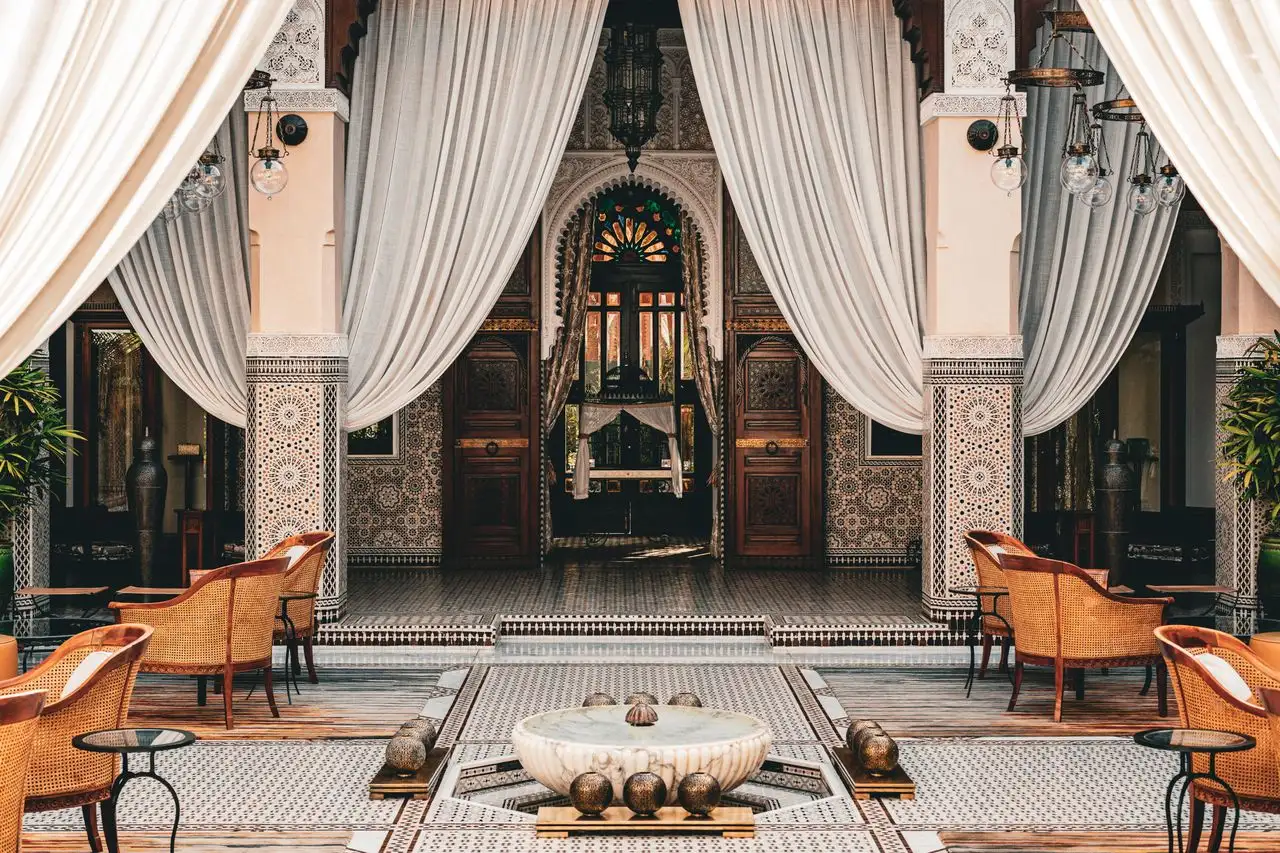
This is the part brochures rarely mention. Many riads sit deep inside a medina where vehicles can't reach the door, so the last stretch to check in is on foot, usually with a porter and a hand cart for the luggage. Inside, many riads have steep, narrow staircases, rooms on upper floors and a rooftop terrace you reach by stairs.
None of this rules out a riad, and for many travelers it's the best part of the trip. It simply means choosing carefully: a ground-floor room, a riad close to a gate where the car can stop, or a hotel with a lift for the nights where you'd rather not think about steps at all. Our guide on choosing between a riad and a hotel explains how the two experiences differ, and mixing both across one itinerary often works best.
How a Private Driver Changes the Day
A dedicated driver takes care of the practical parts that make travel tiring: station stairs, luggage transfers, long waits and rushed schedules. Your vehicle is yours alone, so nothing leaves without you, and there is no fixed departure time set by other people's schedules.
In practice, it also means the walking is yours to choose. You can do the morning walk and rest in the afternoon, skip a climb and wait in the car, or end a medina visit early because the heat is building. A group tour has to keep moving to satisfy everyone, which is why many older travelers find a private tour the more comfortable option, a point we cover in whether a private trip costs more than a group tour.
Heat, Altitude and Health
Season changes how far you can comfortably walk. Spring and autumn are the easiest windows for most older travelers, as the temperatures are mild and a morning walk doesn't wear you out. Winter is cooler, with cold desert nights, while summer heat in the cities and the south can make even a short walk tiring. Our guide to the best time to visit Morocco goes month by month.
Two practical points deserve attention before you go. First, some itineraries cross high mountain roads, and the UK Foreign Office notes that altitude sickness is a risk in parts of Morocco, with more detail on altitude illness from TravelHealthPro. Second, bring enough of your prescription medication for the whole trip: the FCDO's health advice for Morocco warns that travelers have sometimes struggled to source their medicines, and that pharmacies may ask for a new prescription from a Moroccan doctor if they don't stock the same one.
The same page points out that public health facilities offer limited care while private clinics work to a higher standard, so make sure your travel insurance covers local treatment and medical evacuation. TravelHealthPro also lists vaccine recommendations and health risks for Morocco, and it's worth checking at least eight weeks before you travel. For a broader checklist, see what to do before travelling to Morocco and whether it's safe to go right now.
What a Well-Paced Trip Looks Like
A comfortable itinerary for older travelers is built on rhythm. Two nights in the same place wherever possible, so you unpack once and skip a morning of luggage. One main walking block per day, not three. A lighter day after the heaviest one, and drives broken up with a proper lunch stop rather than pushed through in one go.
The itineraries on our tours for seniors page run from 8 to 10 days, and each one can be adjusted to your pace. Good starting points include the imperial cities tour from Casablanca, the Tangier and imperial cities 8-day tour and Agadir and the imperial cities, which adds a coastal stretch where the walking is easiest.
Before you book any trip, with us or anyone else, ask these questions:
- How many hours a day will we spend in the vehicle, and where are the rest stops?
- How long is the walk at each stop, and is there an easier alternative?
- Can the car reach the door of each hotel, or is the last stretch on foot?
- Are there stairs at the accommodation, and can we have a ground-floor room?
- Is there a lighter day after each demanding one?
- Can the plan change once we are there if we feel tired?
A good operator answers each of these specifically. A vague "everything is easy" is the signal to ask again.
Frequently Asked Questions
How much walking is there on a Morocco tour for seniors?
On a private tour, the car covers the distances between cities, so walking is concentrated in the medinas, a few historic sites and the walk to a desert camp. Most days include one or two walks broken up by time in the vehicle. The most demanding stops are usually the Fes medina and the kasbahs, and these can be shortened or skipped.
Is Morocco suitable for travelers with limited mobility?
It can be, with careful planning, but it isn't an easy destination. Many sights involve steps and uneven ground, and the old medinas are not practical for everyone. A private itinerary can be built around the places with the fewest obstacles, so tell us about your mobility needs before we plan anything.
What is the best time of year for older travelers to visit Morocco?
Spring (March to May) and autumn (September to November) are the most comfortable seasons for most older travelers, with mild days and manageable desert heat. Winter suits those who prefer cooler weather and quieter sights, but desert nights are cold. We recommend avoiding summer in the cities and the south.
Can I skip the medina walks and still enjoy Fes or Marrakech?
Yes. A short guided route with a seat and a tea break, a visit to a palace or garden, or a terrace view over the medina gives you a good sense of each city without the full maze. You decide how far to go on the day, and the driver waits wherever you stop.
Do I need to be fit to spend a night in the desert?
No. The camel ride is optional, and you can ask whether a 4x4 transfer to the camp is possible. The walking is limited to soft sand between the vehicle and your tent, so request a tent close to the dining area if sand is a concern.
Written by
Said, Senior Guide and co-founder of Morocco Tours. A former mountain guide, Said has been a guide certified by Morocco's national tourist office since 2009.
Every traveler walks at a different pace. Tell us your dates, how far you like to walk in a day, and any concerns about stairs or heat, and we'll build the itinerary around it.
Explore Tours for Seniors → · Plan a Private Trip →
You may also like: What is the Best Time to Visit Morocco? · What to Do Before Travelling to Morocco · Fes Travel Guide