 North → ImperialNorth → Imperial
Private tours through the Moroccan north, from short escapes to circuits combined with the Imperial Cities. All customizable.
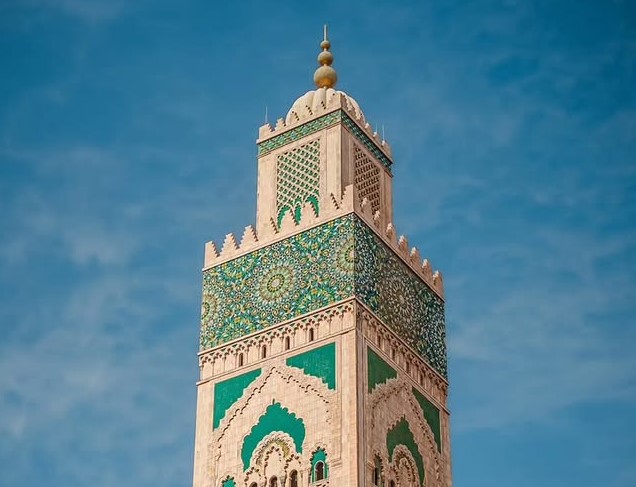
Northern Morocco doesn't behave like the rest of the country. The architecture is white, blue, sometimes pastel. The cooking uses more seafood, more olive oil, less cumin. Half the older generation still speaks Spanish, the Spanish Protectorate ran here from 1912 to 1956, and the legacy survives in street names, bakeries, and the menus of seafront restaurants in Tetouan and Larache.
Geographically it's three regions stitched together. The Mediterranean coast, Tangier, Tetouan, Martil, M'diq, Cabo Negro, Al Hoceima, beaches that face Spain, an hour of cool wind even in August. The Rif Mountains, Chefchaouen, the Akchour waterfalls, Talassemtane National Park, Jebala villages where the women still wear striped red-and-white woven blankets. And the inland heritage corridor, Volubilis (the largest Roman ruins in North Africa), Moulay Idriss (Morocco's holiest town), Meknes and Fes.
It's also the most ethnically layered region. Berbers, Andalusians who arrived after the 1492 Reconquista (the Naciri and Bennouna families in Tetouan still trace their lineage back to Granada), Sephardi Jews from Toledo and Seville, Arabs from the east, and the descendants of Spanish and French settlers all left something behind. You hear it in the music, the Tarab Andalusi orchestras of Tetouan and Tangier still play a repertoire that came over from Granada in the suitcases of refugees, and you taste it in dishes like the white-fish pastilla of Larache or the seafood tagine of M'diq, which uses olive oil instead of the saffron-and-cumin base you'd find in Marrakech.
We've been organising private tours through the Moroccan north since 2011. Our drivers know which day Chefchaouen is quiet (Sunday morning, before the Casablanca buses arrive), which Jebala village holds the best Tuesday souk (Bab Berred, in the cedar forests above Chefchaouen), and where to stop for grilled sardines on the road between Asilah and Larache. Five days is a minimum here, ten gives you the real picture.
The Moroccan north isn't a single landscape. It's a city of crossroads, a blue mountain town, an Andalusian coastline and a wild Roman interior, each with its own character, climate and travel rhythm.
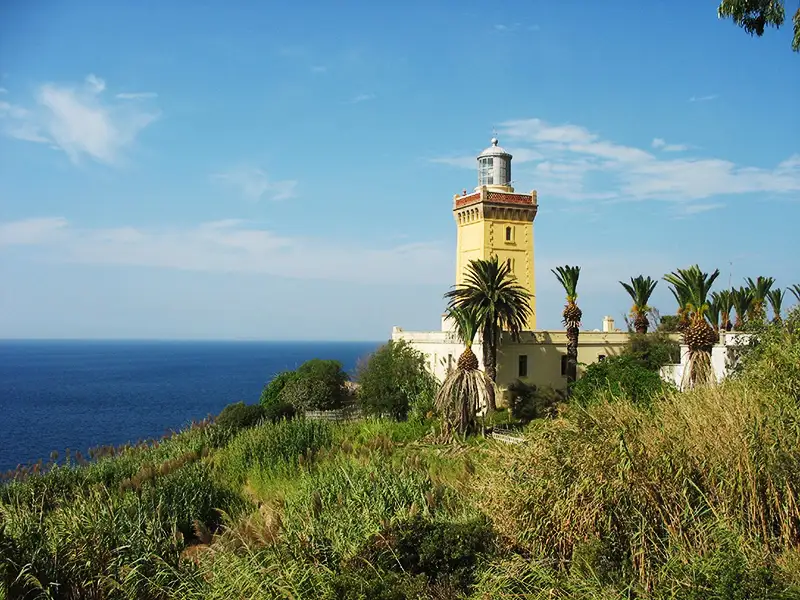
14 kilometres from the Spanish coast, across the Strait of Gibraltar. The kasbah looks out at two continents on a clear day. Tangier has been Phoenician, Roman, Portuguese, Spanish, and International Zone, and it's still the most cosmopolitan medina in Morocco, where Paul Bowles, Burroughs and Matisse spent winters writing and painting. Easy to reach by direct flights from Europe or by ferry from southern Spain.
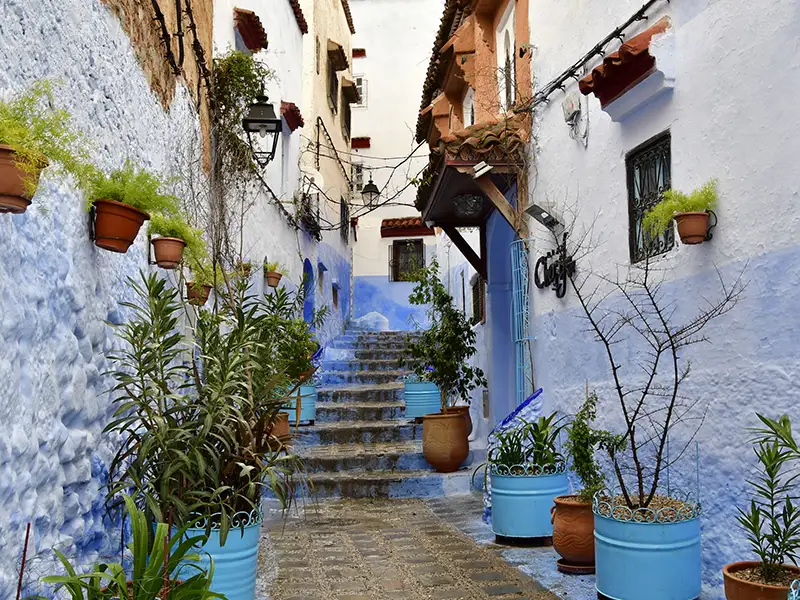
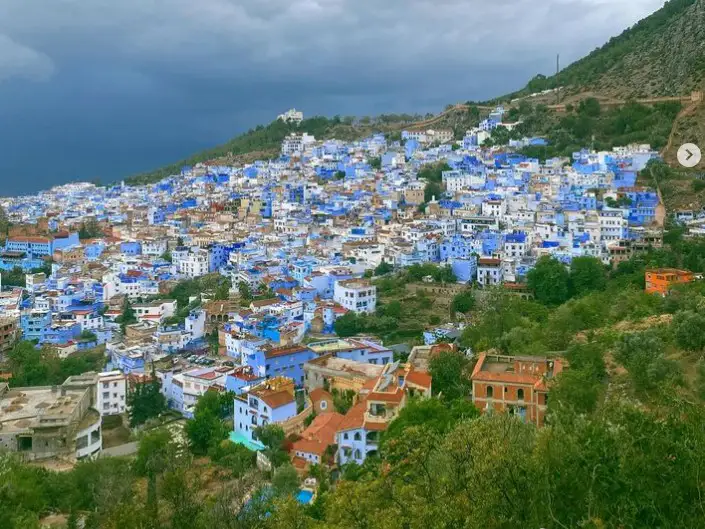
Founded 1471 by Andalusian refugees fleeing the Reconquista, painted blue in the 1930s, depending who you ask, by the Jewish community to symbolise the sky, or to keep mosquitoes out. Sat at 600m in the Rif foothills, the medina is small, walkable, and at its best at 7am before the day-trippers from Tangier arrive. The Akchour waterfalls are 30 minutes away.
Tetouan, "the White Dove", was the capital of the Spanish Protectorate. Its UNESCO medina (1997) is the best-preserved Andalusian-Moroccan medina anywhere, founded by Granadan refugees in the 15th century. Just down the coast: Asilah's whitewashed walls covered in murals, the beaches of Martil, M'diq and Cabo Negro, and Larache with the Roman ruins of Lixus on the cliff above.
The Rif rises 2,000 metres behind Chefchaouen, cedar and cork forests, Jebala villages where the dialect shifts, and the Talassemtane National Park with Barbary macaques. South of the Rif, the agricultural plain holds Volubilis, the largest Roman site in North Africa, and Moulay Idriss, Morocco's holiest town, built on a hill in 789 by the founder of Fes.
Tangier is the natural starting point, closest to Spain, served by ferry and by direct flights from most European cities. But you can also land elsewhere and we'll add a transfer day or an overnight train.
This is the real decision travellers face. Either you stay in the north and go deep, Tangier, Chefchaouen, the Rif, the Mediterranean coast. Or you treat the north as the start of a one-way trip down to Marrakech, adding Volubilis, Meknes and Fes on the way. Here's how to choose.
Stay in the north, Tangier, Chefchaouen, Tetouan, Asilah, the Rif. No long driving days. Good fit if you've already seen Marrakech or Fes, or if you want a focused Mediterranean trip that pairs well with a Spanish itinerary.
A one-way route from Tangier ending in Marrakech (or vice-versa). Adds Volubilis, Meknes and Fes to the northern stops. The most complete first-time-Morocco trip, coast, blue medina, Roman ruins, imperial cities. The classic Andalusian Morocco heritage tour .
Our take:
if it's your first Morocco trip, do the combined route. The country rewards the long view, and going one-way from Tangier to Marrakech is the most natural geography. If you've already seen Marrakech or Fes, or if you're coming from Spain, stay in the north and go slow.
Beyond the medinas, the experiences that make the Moroccan north different from the rest of the country. We build each of these into private tours on request.
Walk the medina at 7am when the blue is still cool and the only sounds are bakery shutters and the muezzin. By 11am the day-trippers from Tangier arrive. The trick is to stay overnight.
Two waterfalls, 30 minutes from Chefchaouen. The easier loop is 90 minutes return; the full hike to God's Bridge, a natural stone arch, takes 3 hours. Cafés serve mint tea along the riverbed.
Every August since 1978, international and Moroccan artists repaint the medina walls during the Asilah Cultural Festival. The result is an open-air gallery that changes year to year. Best visited September-November.
Grilled sardines off the Larache port at sunset. The Andalusian white-fish pastilla at Restaurant Blanco Riad in Tetouan. Spanish-style boquerones with mint tea in Tangier. Pan-fried chrimila sea bream on Cabo Negro beach. The northern table looks east, not south, olive oil base, no saffron, lots of seafood.
The largest Roman site in North Africa, UNESCO-listed. The Orpheus mosaic and the Twelve Labours of Hercules are still in situ. Drive up to Moulay Idriss afterwards for lunch on a hillside terrace, Morocco's holiest town since 789.
The Tarab Andalusi orchestras of Tetouan and Tangier play a repertoire that came over from Granada in 1492, strings, oud, qanun. We can arrange a private concert in a Tangier riad, or seats at the Tangier Festival in summer.
Day or two-day excursions into Talassemtane National Park, Bab Berred for the Tuesday cedar-wood souk, Cherafat where blacksmiths still hand-hammer farming tools, El Kelaa where Jebala women weave the red-and-white striped mendil blankets on backstrap looms. Barbary macaques in the upper cedars. Our driver-guides grew up in these villages.
Morocco's holiest town, built into the hillside in 789 by the founder of the Idrisid dynasty, closed to non-Muslims until 2005, still off the main tourist route. Whitewashed houses tumble down toward the only cylindrical minaret in Morocco. Best paired with Volubilis 5 km below, and a hillside lunch overlooking the olive groves.
Tell us what matters, Andalusian heritage, photography, hiking, gastronomy, and we'll build the route around it.
Every detail handled by our team in Morocco, so you can focus on the medinas, the mountains and the Mediterranean light, not the logistics.
Air-conditioned sedan or minivan, just your group. Bottled water onboard. Tangier port and airport pick-ups standard.
English by default. Spanish, French, Italian and German on request, common in the north thanks to the Spanish Protectorate legacy.
Traditional riads in Chefchaouen, kasbah hotels in Tangier, beachfront stays on the Med. Palace-hotel upgrades available.
Breakfast at every riad. Andalusian-Moroccan specialties on request. Dietary needs (vegan, gluten-free, halal) all handled.
Three popular routes our travellers choose for a Northern Morocco trip, with day-by-day breakdowns in our guides.
Tangier kasbah, two nights in Chefchaouen, day in Tetouan, beach time in Martil or Asilah. Slow, photogenic, walkable.
The complete North-to-South circuit. Tangier, Chefchaouen, Volubilis, Meknes, Fes, Marrakech. No backtracking.
Two nights everywhere. Tangier, Asilah, Chefchaouen, the Rif, Tetouan, the Mediterranean beaches. For photographers and slow travellers.
What guests say
Common questions
Northern Morocco is the Mediterranean and Andalusian face of the country, Tangier at the meeting point of the Atlantic and Mediterranean, Chefchaouen 's blue-washed medina in the Rif foothills, the UNESCO medina of Tetouan, the murals of Asilah, the Rif Mountains' Akchour waterfalls and Talassemtane National Park, and the Roman ruins of Volubilis . Cultural layers from Berber, Andalusian, Arab, Jewish and European traditions make it the most ethnically mixed region of Morocco.
Most Northern Morocco tours start from Tangier, since it has the closest international airport and a ferry port from Spain. Tours can also start from Casablanca, Fes, Rabat, Oujda or Marrakech depending on your incoming flight, we'll add a transfer day or an overnight train. We welcome travellers arriving by ferry at the Tangier port. One-way routes from Tangier ending in Marrakech (or vice-versa) are common.
A short Northern Morocco escape (4-5 days) covers Tangier + Chefchaouen + one or two stops. A full Northern circuit (7-8 days) adds Tetouan, Asilah, the Rif waterfalls, Volubilis and Meknes. A combined Northern + Imperial Cities tour (10-12 days) extends to Fes and Marrakech. Photographers and slow travellers often stay 8+ days just in the north.
Yes, Chefchaouen is the most photographed small town in Morocco for a reason. The entire medina is washed in shades of blue, the Rif Mountains form a backdrop, the Ras El Ma spring runs through the upper town, and Akchour waterfalls are 30 minutes away. We recommend two nights to walk the medina at dawn (before tour buses), hike to God's Bridge, and stay in a traditional pension. One-day trips from Tangier are possible but cramped.
Yes, and it's the most popular Northern Morocco itinerary. A typical 8 to 10-day route runs Tangier, Asilah, Chefchaouen, Volubilis, Meknes, Fes, Marrakech, ending in the south. This lets you experience the Mediterranean north, the Blue City, the Roman ruins, and the two great imperial medinas in a single trip. We design these as one-way tours so you don't backtrack.
Northern Morocco has a temperate Mediterranean climate, milder than the south. Spring (March-May) and autumn (September-November) are ideal for medina walks, mountain hikes and beach days alike (18-26°C). Summer (June-August) is excellent for the Mediterranean beaches of M'diq and Cabo Negro but warm in the medinas. Winter is mild on the coast (12-17°C) and properly cold in the Rif Mountains at night.
Yes. Northern Morocco is one of the most family-friendly regions, Mediterranean beaches, shorter driving distances between sights, kid-friendly hiking around Akchour waterfalls, and Chefchaouen's compact medina (no risk of getting lost). We adapt itineraries with family-friendly riads, regular rest stops, swimming days, and cultural activities scaled to younger travellers.
Price depends on group size, season, accommodation level and route. Tell us your dates and your plan, and we send a personalised quote within 24 hours.
Northern Morocco is the most multilingual region of the country. Locals speak Darija (Moroccan Arabic), Tarifit (Rif Berber) and Spanish, a legacy of the Spanish Protectorate (1912-1956) in Tetouan, Larache and Al Hoceima. French is widely understood, English in tourist zones. Our driver-guides speak English by default; French, Spanish, Italian or German on request.
Yes, Volubilis is the best-preserved Roman site in North Africa and a UNESCO World Heritage Site (1997). The mosaics are exceptional (Orpheus, Bacchus, the Twelve Labours of Hercules), and the Arc de Triomphe of Caracalla still stands. It's an easy drive from Meknes and 1 hour from Fes, almost always included on Northern Morocco routes between the Rif and the Imperial Cities. Allow 2 hours on site, ideally with a licensed guide.
From the Tangier ramparts looking back at Spain, to the Chefchaouen alleys at dawn, to a Tetouan table set with grilled sardines and Andalusian music, let us design a private journey through the Moroccan north that moves at your pace. Tell us your travel dates, what matters to you (heritage, slow travel, photography, family time, the Mediterranean coast), and we'll send a tailor-made itinerary within 24 hours. No pushy sales, no templates, just local knowledge built since 2011 put behind your trip.