
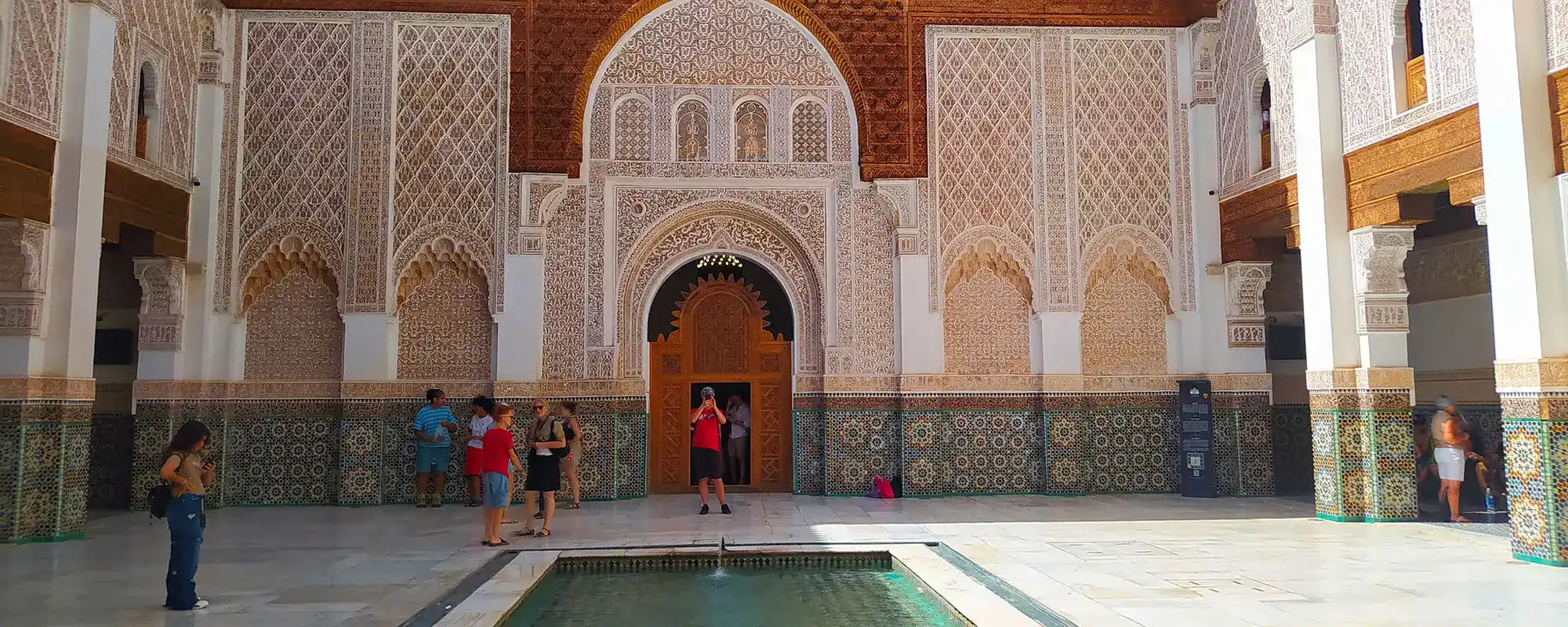


The four imperial cities are not a single style of place. Fez feels medieval — its 9,000 alleyways have barely shifted since the city was founded in 789. Marrakech is the opposite: louder, hotter, more theatrical, organised around Jemaa el-Fna where storytellers and snake-charmers still work at sunset. Meknes is the smallest and the least visited, also known for having the longest ramparts in Morocco. Rabat is the modern capital, the ocean on one side, twelfth-century kasbah on the other.
What links them is History. Marrakech was the Almoravid capital from 1062. Fez was already the Idrisid capital by then. Meknes had its moment under Moulay Ismail, a contemporary of Louis XIV, in the late 1600s, when he tried to build a Versailles in earthen-walled stables and palaces. Rabat became the capital twice — first in the twelfth century, then again in 1912 under the French Protectorate. Walking through them in sequence is the closest you can get to walking through Moroccan history in chronological order.
This is what travelers tend to remember afterward: the smell of cedar wood and warm bread in a Fez derb at 8 in the morning, mint tea served on a Marrakech rooftop at dusk, the absolute quiet inside the Mausoleum of Moulay Ismail, and the Atlantic wind on the ramparts of Rabat's Kasbah des Oudayas.
We've been organising private tours through the imperial cities for fifteen years. Our job is to handle the route, the riads, the drivers and the expert medina guides. Yours is simply to take your time and live in each city before moving to the next.
Four cities, four dynasties, four very different atmospheres. Here's what to expect inside each — and what makes it worth its place on the route.

Pink ramparts that turn copper at sunset. Orange-blossom courtyards hidden behind anonymous medina doors. Jemaa el-Fna at dusk — storytellers, snake-charmers, and food stalls firing up, all under the Koutoubia minaret. Marrakech is the loudest, hottest, and most theatrical of the four imperial cities — capital under three dynasties since 1062, and gateway to the Atlas Mountains and the Sahara Desert.

Walk in at 7:00 AM, and the only sounds are donkey hooves on stone, copper-beaters at Place Seffarine, and the muezzin from Al-Qarawiyyin. Founded by Idris I in 789, the medina hasn't structurally changed since the 12th century — 9,000 alleyways, no cars, dye pits still in the same hands. Morocco's oldest imperial city, and the slowest to give itself up.

The quietest of the four imperial cities — featuring wide olive groves outside the monumental walls, a medina that empties by mid-afternoon, and absolute silence inside the Mausoleum of Moulay Ismail. Founded in the 11th century by the Almoravids, the city was later rebuilt by the Alawite Sultan as his Versailles between 1672 and 1727, erecting forty kilometres of ramparts, granaries that could feed an army, and Bab Mansour, the biggest gate in North Africa. Most tour groups skip most, the travelers who don't usually remember it most.

Short paragraph describing this card.Atlantic wind on the ramparts. White-and-blue houses inside the Kasbah des Oudayas, and bougainvillea climbing over Andalusian walls. Capital since 1912, today Rabat is the royal seat, home to embassies, the modern tramway, and the cafés along Avenue Mohammed V. Remarkably clean, green, and calm, it has been a UNESCO World Heritage site since 2012, and the only imperial city on the ocean.
All four imperial cities have an international airport (direct or with a connection), so you can start your journey from any of them. While most travelers begin in Casablanca, Marrakech, or Fez, we organise tours starting wherever your flight lands.
Beyond the monuments — these are the authentic experiences that turn a classic city visit into a deep cultural immersion. We seamlessly design each of these into our private tours upon request.
Half a day inside Fez el-Bali with a guide who grew up just two streets from Al-Qarawiyyin. He'll cut behind the spice souk, knock on the door of a 14th-century madrasa that most tour groups walk past, and explain why one alley smells of cedar wood and the next of fresh mint. We offer the same setup in Marrakech with our local guides.
From the alley, a small wooden door. Behind it, a courtyard with an orange tree, hand-carved cedar above zellige walls, and breakfast served on the rooftop. Whether you prefer boutique comfort, authentic mid-range charm, or luxury palace riads — we book them based on your preferences and what each city does best.
Savor pastilla and harira in Fez — pigeon, almonds, and a cinnamon-sugar dusting. Taste tanjia in Marrakech — lamb slow-cooked in a clay urn buried in the hammam embers. Enjoy lemon chicken tagine in Meknes and fresh grilled sardines by Rabat's port. We book cooking classes, food walks, and rooftop dinners on request.
A morning with the famous Fez blue potters in Aïn Nokbi district. A master zellige-tile cutter showing why crafting a single star takes four pieces and twenty minutes of work. Meet the traditional leather workers above the historic Chouara tannery, or visit dedicated carpet weavers in the Middle Atlas. These are real workshops, not show-rooms.
Steam, black olive soap, a kessa exfoliation, and argan oil. This ritual has barely changed in centuries — and Moroccans still go weekly. We book everything from authentic neighbourhood hammams (€10, locals only) to five-star spa experiences in palace riads.
The Bahia Palace's stuccoed ceilings. The Saadian Tombs sealed for two centuries until 1917. The Bou Inania Madrasa. Moulay Ismail's Mausoleum. The Hassan Tower above the Bou Regreg. The Roman mosaics at Volubilis — that is five UNESCO World heritage sites across four historic cities.
The souks are still traditionally organised by craft — Souk Attarine for spices, Souk Smata for slippers, and souk Sebbaghine for dyed wool drying in the sun. Our guides know exactly which shops are family-run, which ones overprice tourists, and how to bargain without offending anyone.
Andalusian classical music in Fez — strings, vocals, and a ten-century-old repertoire. Gnawa rhythms in the Marrakech medina at night. The Master Musicians of Joujouka up in the Rif. We can build a trip around the Fez Festival of World Sacred Music (June) or the Marrakech Popular Arts Festival (July).
Every detail of your Morocco UNESCO heritage tour is handled by our team in Morocco — so you can focus on the medinas, the palaces and the meals, not the logistics.
Air-conditioned sedan or minivan, just your group. Bottled water onboard.
English-speaking professional. Multilingual options on request. Plus licensed local guides inside Fez & Marrakech medinas.
Traditional riads in each medina, or modern hotels. Palace upgrades available.
Breakfast at every riad. We book each city's specialty dish on request. Dietary needs handled.
Three popular routes our travelers choose for an Imperial Cities trip — with day-by-day breakdowns in our guides.
Cross the Middle Atlas between the two great medinas. Two full days in each city, one travel day with a stop at Ifrane or the cedar forest.
View full itinerary → →Casablanca → Rabat → Meknes → Volubilis → Fes → Atlas → Marrakech. All four cities plus the Roman ruins and a Middle Atlas stop.
Explore this route → →All four imperial cities plus a night under the stars in Merzouga's Erg Chebbi dunes. The most complete Morocco tour we run.
See detailed plan → →Our full collection — from short escapes to multi-week expeditions. Filter by tag to narrow down.

What guests say
Common questions
This tour takes you through Morocco’s legendary imperial capitals: Rabat, Meknès, Fès, and Marrakech. Each city offers its own historical charm, magnificent monuments, and vibrant culture.
Yes, the tour can be fully customized to match your preferences. You can choose the duration, pace, and focus of your journey, whether you are interested in history, architecture, gastronomy, or local traditions.
The itinerary includes visits to royal palaces, ancient mosques, colorful medinas, and UNESCO World Heritage sites. You will also enjoy scenic drives through the Atlas Mountains and explore authentic Moroccan markets.
The Imperial Cities Tour is available all year round. However, spring and autumn are ideal for pleasant temperatures and fewer crowds. The package includes comfortable transportation, accommodations in selected riads or hotels, and guided visits with professional local experts.
Tell us when you want to travel, what you want to see, and how you like to move. We will shape a Morocco itinerary around your rhythm, interests, and comfort level.